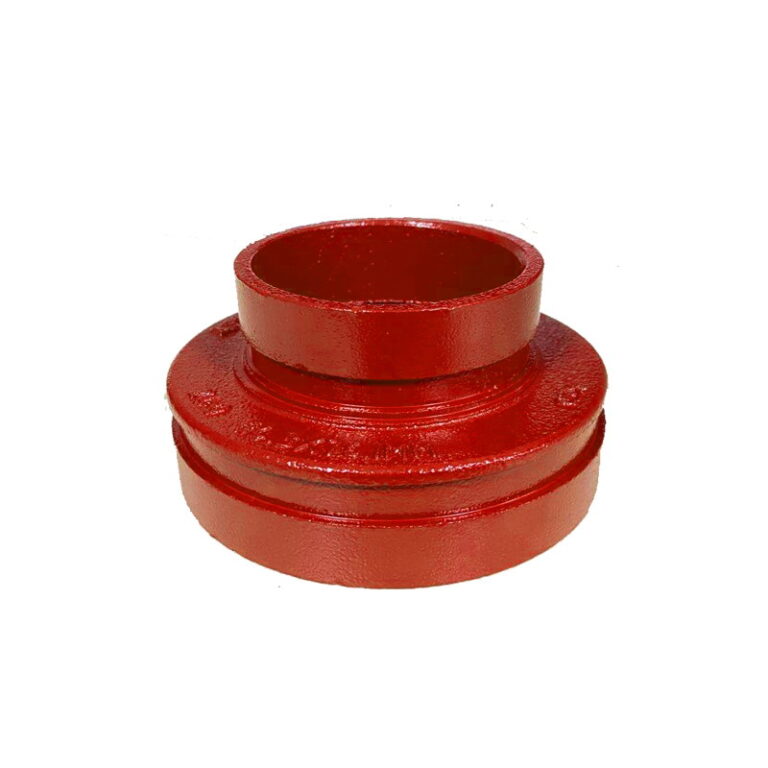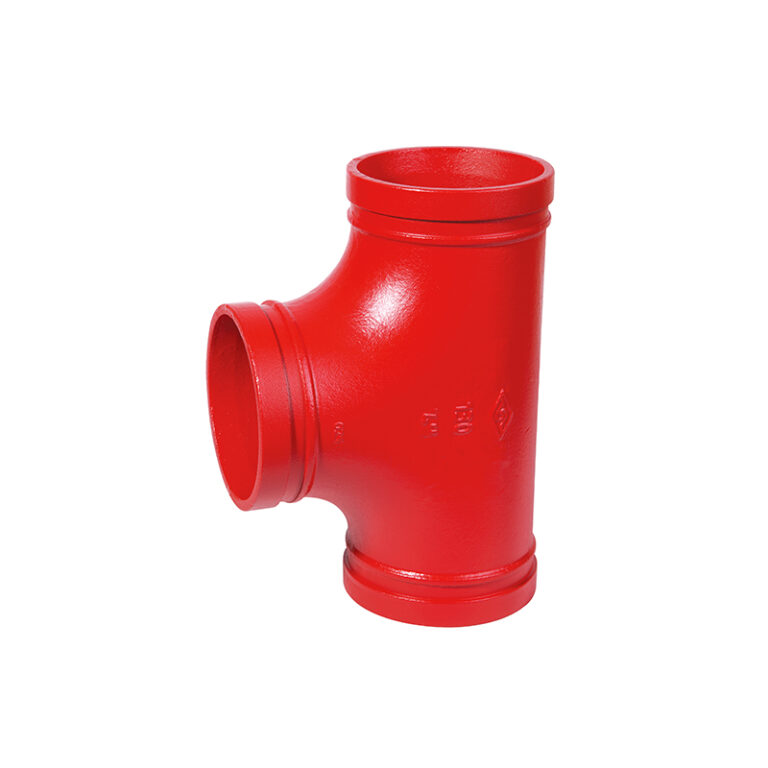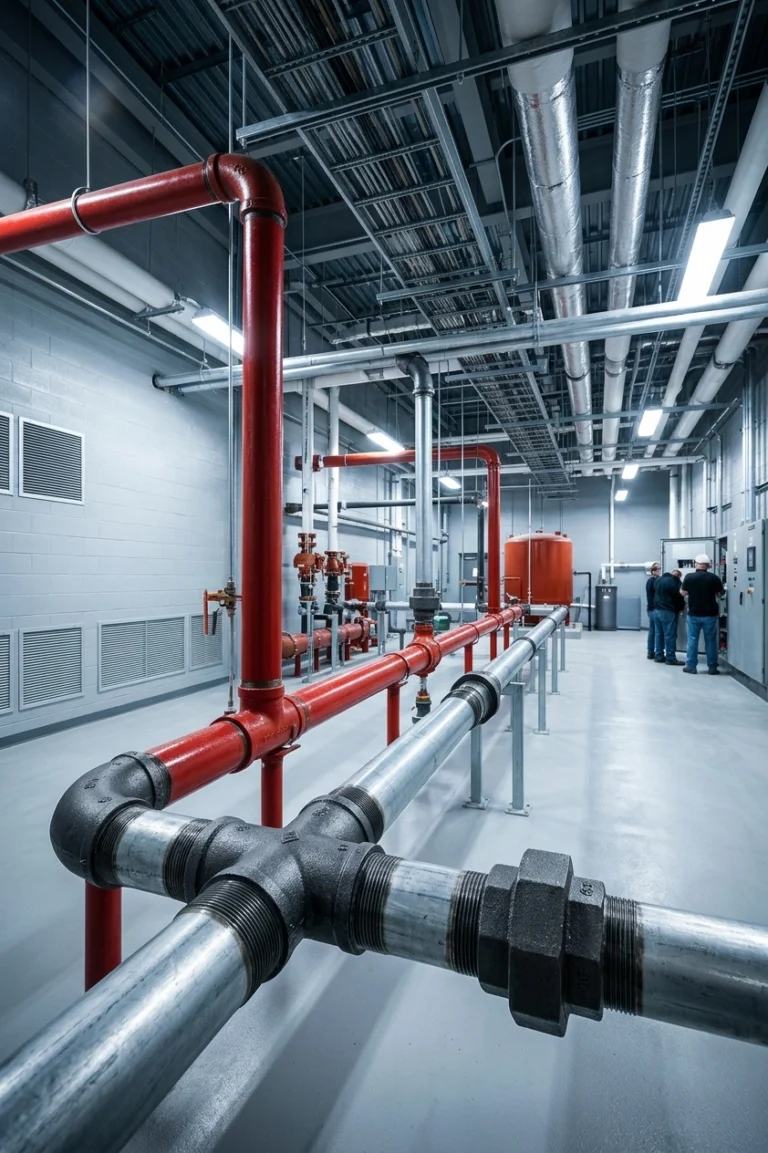
Grooved tees, crosses and reducers are the fittings where a system branches and changes size. Choosing the right one saves extra fittings and couplings, cuts hydraulic loss and shortens installation. This guide explains when to use each and compares MECH models by size and pressure.
Key points
- A tee takes an equal branch; a reducing tee takes a smaller one.
- A cross takes two opposite branches from one point.
- A concentric reducer suits general lines; an eccentric one is used where the top or bottom of the pipe must stay level.
- Some models have a threaded branch or small end to take a sprinkler or threaded pipe directly.
Basic shapes
Tees and reducing tees
| Model | Type | Sizes | Pressure (by size) |
|---|---|---|---|
| 130 | Grooved tee | 1″ – 24″ | 500 / 300 PSI |
| 130S | Grooved tee | 2″ – 8″ | 300 / 500 PSI |
| 130X | Grooved tee | 3″ – 12″ | 300 PSI |
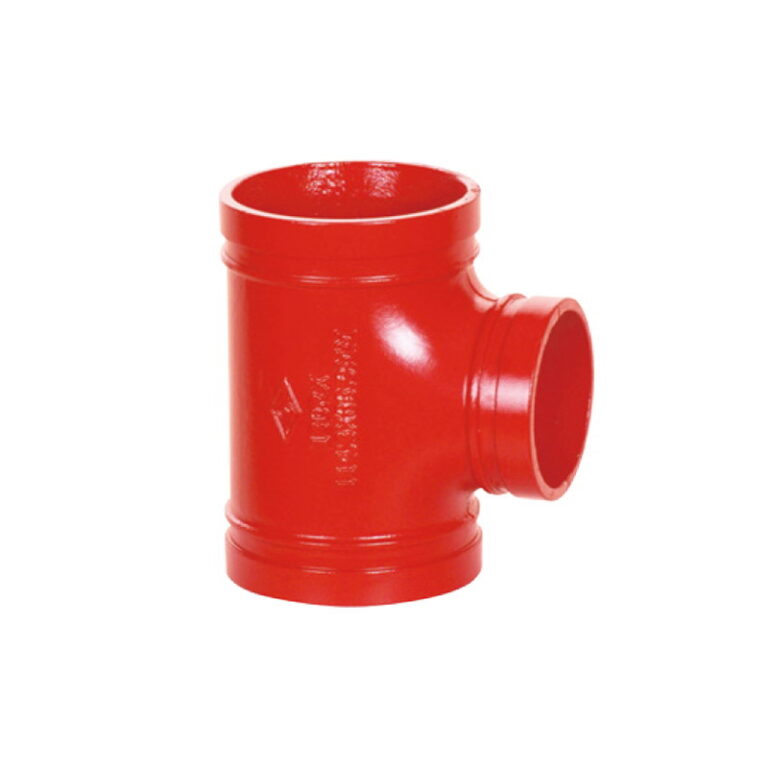
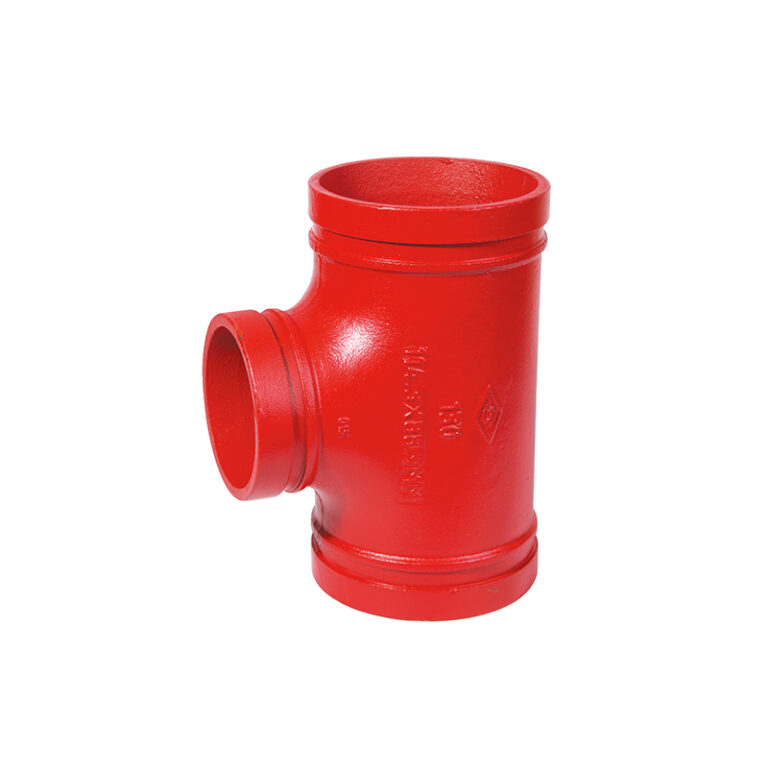
| 130R | Grooved reducing tee | up to 24″ × 20″ | 500 / 300 PSI |
| 130RX | Grooved reducing tee | 3″ × 2-1/2″ – 12″ × 10″ | 300 PSI |
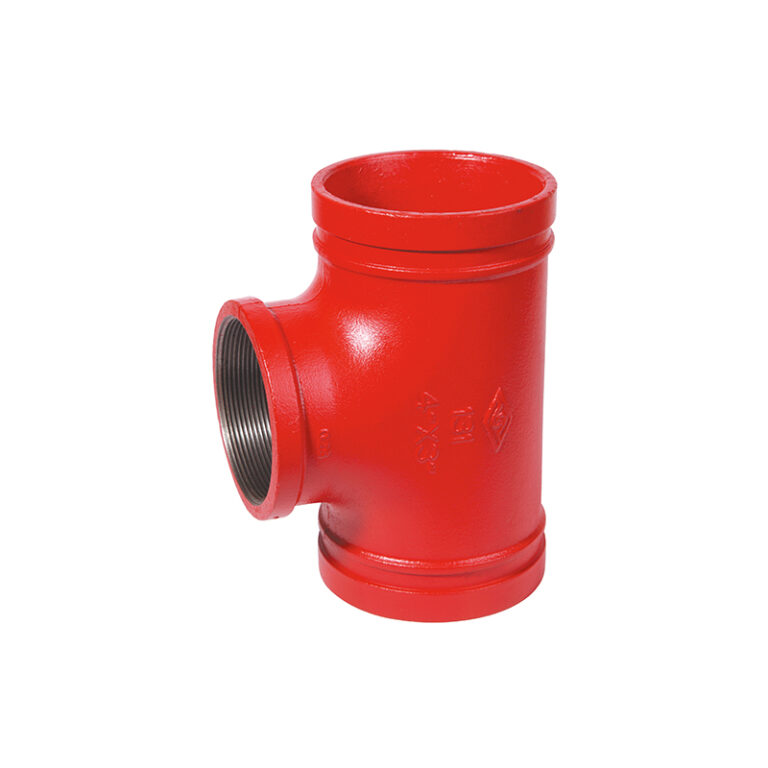
| 131R | Reducing tee, threaded branch | 2″ × 1″ – 8″ × 4″ | 500 / 300 PSI |
| 131RX | Reducing tee, threaded branch | 2″ × 1″ – 8″ × 4″ | 300 PSI |
Reducing tee or mechanical tee?
A reducing tee goes into a new line or where the line is cut; a mechanical tee takes a branch from an existing pipe by drilling its wall, without cutting. See the mechanical tee article in the library for a full comparison.
Crosses
A cross takes two opposite branches from one point, saving two tees and a coupling. MECH offers equal and reducing crosses, some with a threaded branch, such as 180, 180X, 180R, 181, 180RX and 181RX. Sizes and pressure vary in each model’s table.
Reducers
| Model | Type | Sizes | Pressure |
|---|---|---|---|
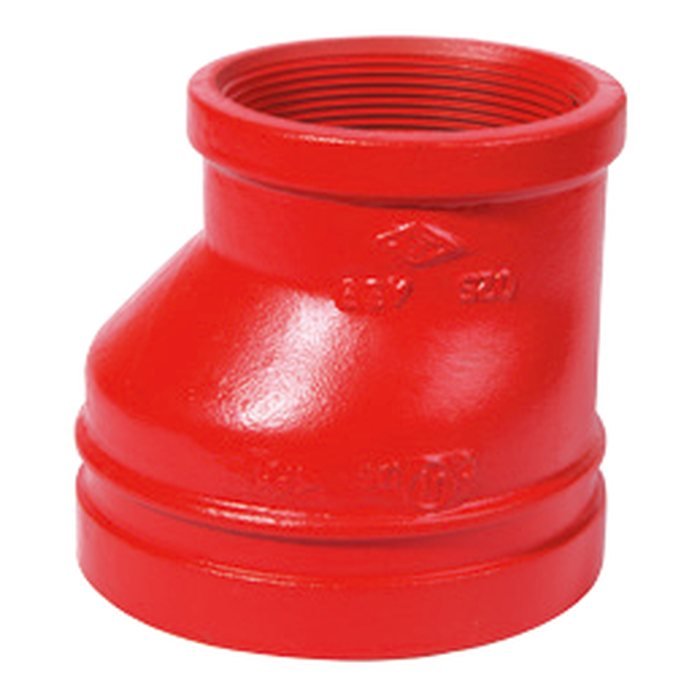
| 240 | Concentric, grooved | 1-1/4″ × 1″ – 24″ × 20″ | 500 / 300 PSI |
| 240X | Concentric, grooved | 4″ × 2-1/2″ – 12″ × 6″ | 300 PSI |
| 240N | Concentric, threaded small end | 1-1/4″ × 1″ – 8″ × 4″ | 500 PSI |
| 240NX | Concentric, threaded small end | See product table | 300 PSI |
| 230N | Eccentric, threaded small end | 4″ × 2-1/2″ – 6″ × 3″ | 300 PSI |
When to use an eccentric reducer
An eccentric reducer keeps one side of the pipe level. Its best-known use is on the fire pump suction, where NFPA 20 requires it to be installed with the top flat to prevent air pockets ahead of the pump.
Caution
Orientation matters: an eccentric reducer fitted upside down on the suction line can trap air and affect pump performance.
Points to check when ordering
- State both sizes — main and branch or small end — with the OD of each.
- State the branch or small-end type: grooved or threaded.
- Check pressure and approval for each size in the product table.
- Count the couplings: three per tee, four per cross, two per grooved-both-ends reducer.
Frequently asked questions
What is the difference between 130R and 131R?
Both are reducing tees, but 130R has a grooved branch while 131R has a threaded branch to take threaded pipe or a sprinkler directly.
Can a concentric reducer be used on the pump suction?
NFPA 20 requires an eccentric reducer on the suction, with the top flat, to avoid air pockets.
Is a cross better than two tees?
It saves a fitting, a coupling and space, but the two branches must be exactly opposite at the same point on the drawing.
References
- NFPA 13 — Standard for the Installation of Sprinkler Systems.
- NFPA 20 — Installation of Stationary Pumps for Fire Protection.
- ASTM F1548 — Performance of Fittings for Use with Gasketed Mechanical Couplings.
- AWWA C606 — Grooved and Shouldered Joints.
- ISO 6182-12 — Grooved-end components for steel pipe systems.
This guide is for technical awareness and does not replace the manufacturer’s data sheet or the requirements of the project’s approved designer.