Many pipes pass through the walls and roof of a concrete fire water tank: pump suctions, fill, overflow, drain and vents. Each penetration is a potential leak if it is not designed and cast in correctly, and every suction outlet needs protection from vortexing. This guide brings these parts together; Fu-Mech fabricates most of them in Riyadh to the project drawing.
Key points
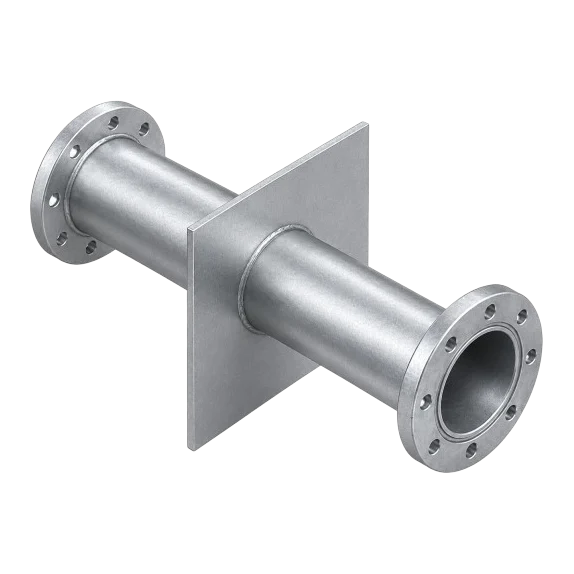
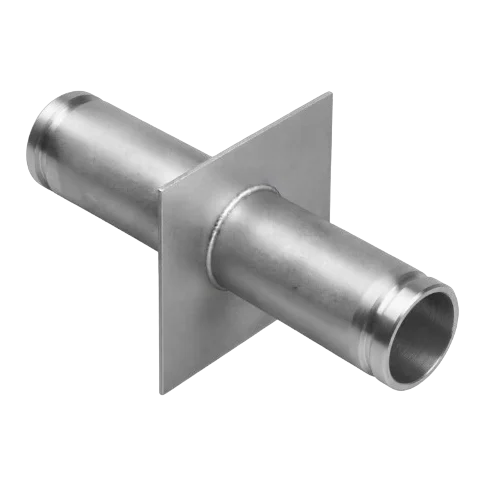
- Puddle flange: a pipe with a welded plate cast into the wall to stop water leaking around the pipe.
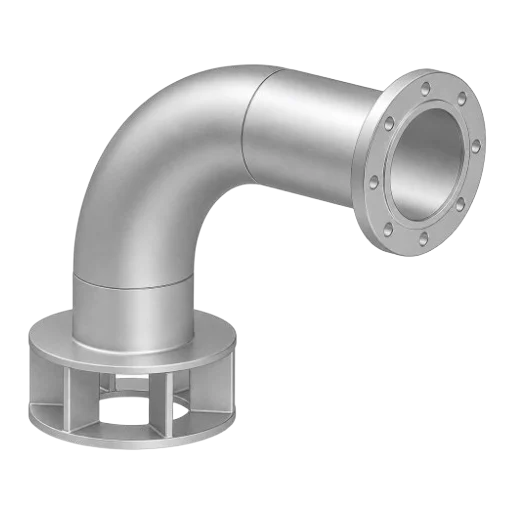
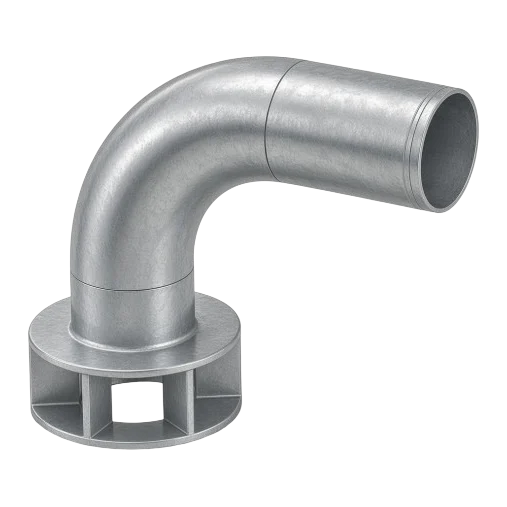
- Anti-vortex plate: a plate over the suction outlet that prevents a vortex drawing air into the pump; NFPA 20 requires one when suction is from a tank.
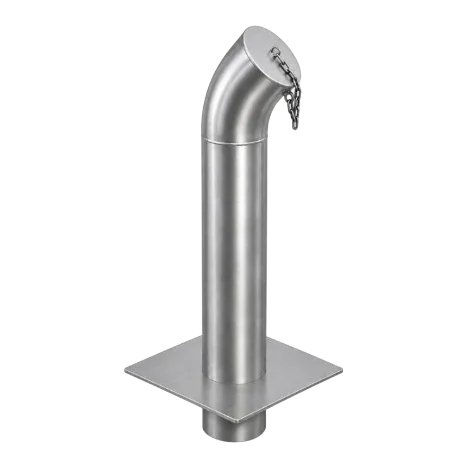
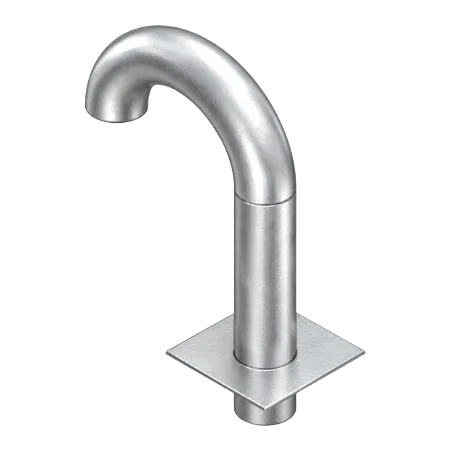
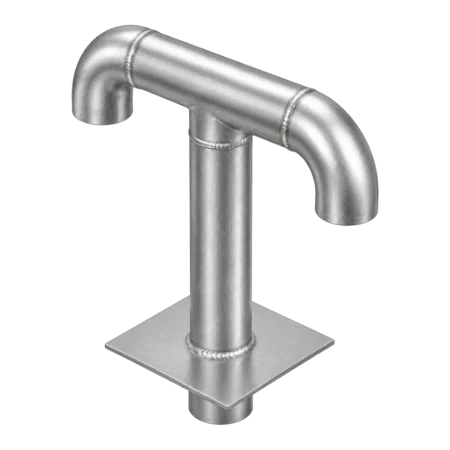
- Vent: a gooseneck on the roof that lets air in and keeps rain and insects out.
- All these parts are made to the wall thickness, size and ends required.
Puddle flanges
A steel pipe cut to suit the wall thickness, with a plate fully welded on both sides at its centre. It is fixed to the reinforcement before the pour, so the concrete bonds around the plate and lengthens any leak path. Its ends suit what connects to them: flange, groove, thread, or plain end for welding.
| Ends | Model |
|---|---|
| Flanged both sides | FU-2SA / FU-2SP |
| Flanged one side | FU-1SA / FU-1SP |
| Grooved both sides | FU-2SGA |
| Flanged × grooved | FU-1SGA / FU-1SGP |
| Threaded both sides | FU-2STA / FU-2STP |
Per the product pages: sizes DN50 to DN600, pipe in carbon steel ASTM A53 / A106 Gr. B (or stainless 304/316 on request), flanges drilled to ASME B16.5 Class 150 (suffix A) or EN 1092-1 PN16 (suffix P), and finish hot-dip galvanised, epoxy or painted.
The anti-vortex plate on the suction
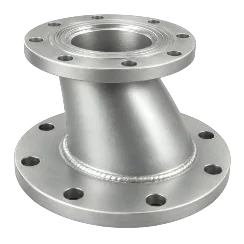
When a pump draws from a tank, a vortex can form above the outlet and pull air into the pump, which then loses performance. The anti-vortex plate is a horizontal plate above the suction opening that breaks the vortex. Fu-Mech makes it with a flanged end (FU-AVXA / FU-AVXP) or grooved end (FU-AVXG). The plate size and its height above the floor are set by the designer under NFPA 20.
Vents and fill on the roof
- Vent: a single gooseneck (FU-VP1S) or double gooseneck (FU-VP2S), welded in one piece with a square base plate fixed to the tank roof. It lets air in and out as the tank is drawn down and filled.
- Fill pipe (FU-TFP): a welded piece with a square base plate for filling the tank from the roof.
The critical detail: coordinate before the pour
Warning
A puddle flange is cast with the wall and cannot be changed after the pour. Fix before fabrication: wall thickness, pipe centreline level, end types and flange drilling, and hole orientation. One mistake here means breaking out concrete.
- Take every penetration from the drawings: purpose, size, level, wall thickness.
- Set the ends required for each penetration by what will connect to it.
- Order fabrication to the dimensions and approve the shop drawings before installation.
- Fix the pieces to the reinforcement at their level and orientation, and inspect them before the pour.
Frequently asked questions
Can a puddle flange be installed after the pour?
The intended method is to cast it with the wall. Installing after the pour needs other sealing solutions set by the designer.
Is galvanising necessary?
It depends on water quality and the project specification. Hot-dip galvanising and epoxy are both available per the product page.
Can non-standard sizes be ordered?
Yes. Fu-Mech products are made to the drawing, with special lengths and ends.
References
- NFPA 20 — Standard for the Installation of Stationary Pumps for Fire Protection.
- NFPA 22 — Standard for Water Tanks for Private Fire Protection.
- ISO 1461 — Hot dip galvanized coatings on fabricated iron and steel articles.
Design, anti-vortex plate dimensions and penetration levels are the responsibility of the project’s approved designer.
Part of a complete guide
This article is part of The Complete Guide to Sprinkler Systems in Saudi Arabia: Types, Components and Testing.