Isolation valves on buried fire mains outside the building, or behind a pump room wall, are out of sight. A valve closed by mistake means a network with no water in a fire. The answer is an indicator post: a post above ground or a box on the wall from which the valve is operated, with the word OPEN or SHUT shown in a window an inspector can read from a distance.
Key points
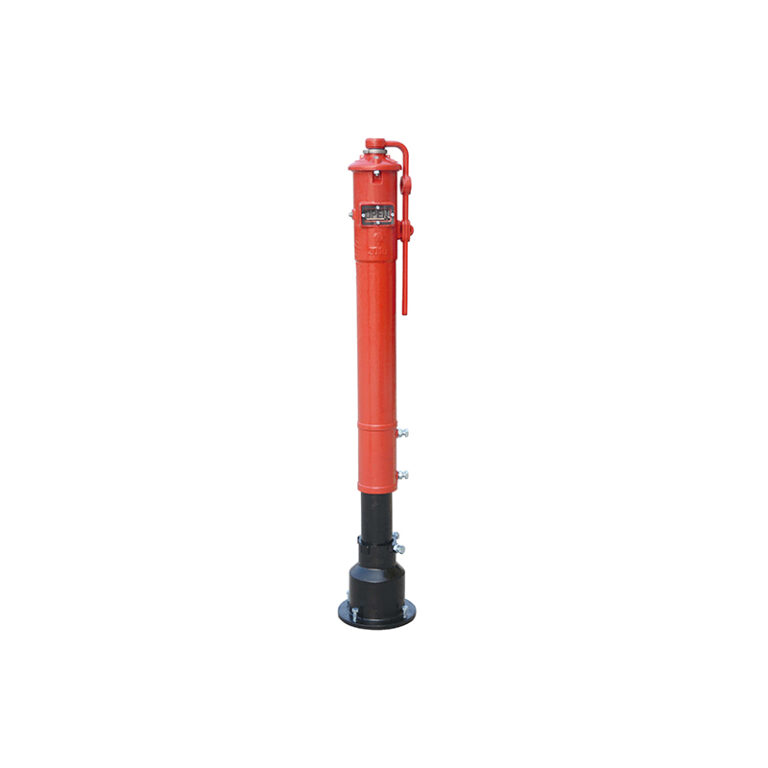
- Vertical indicator post (IP): for a valve buried underground, with the post rising above ground level.
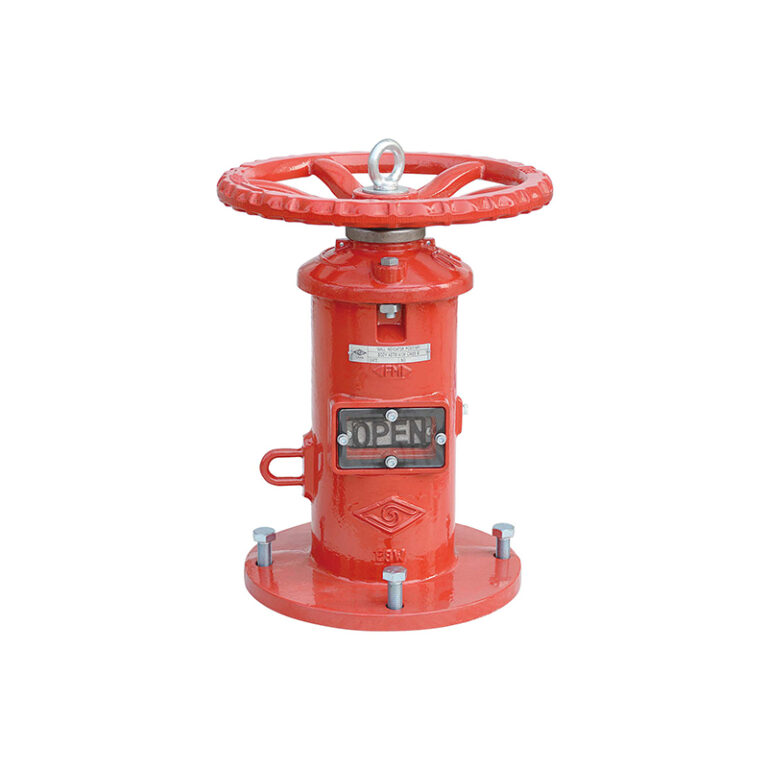
- Wall indicator post (WP): for a valve behind a wall, mounted on the wall.
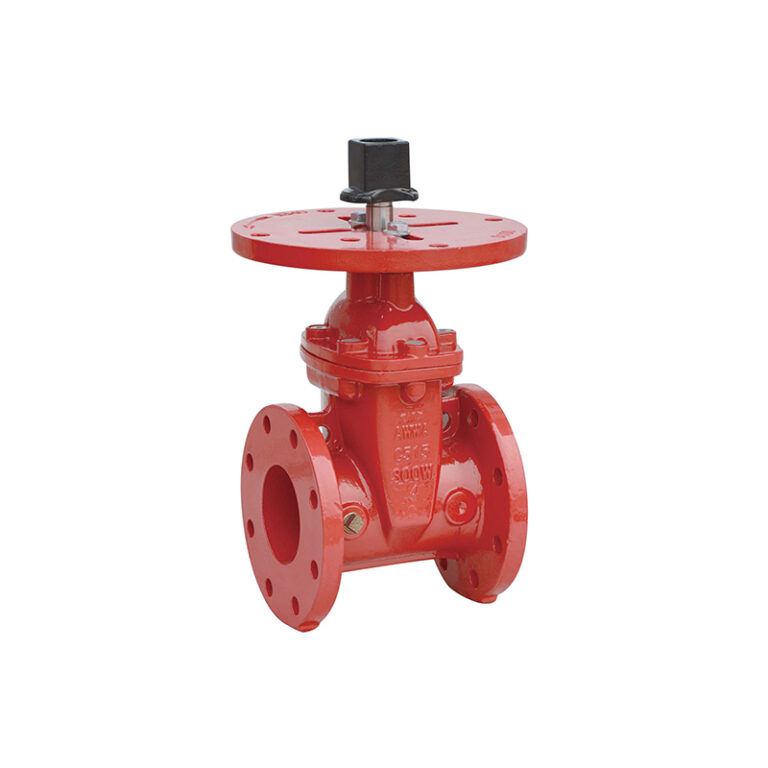
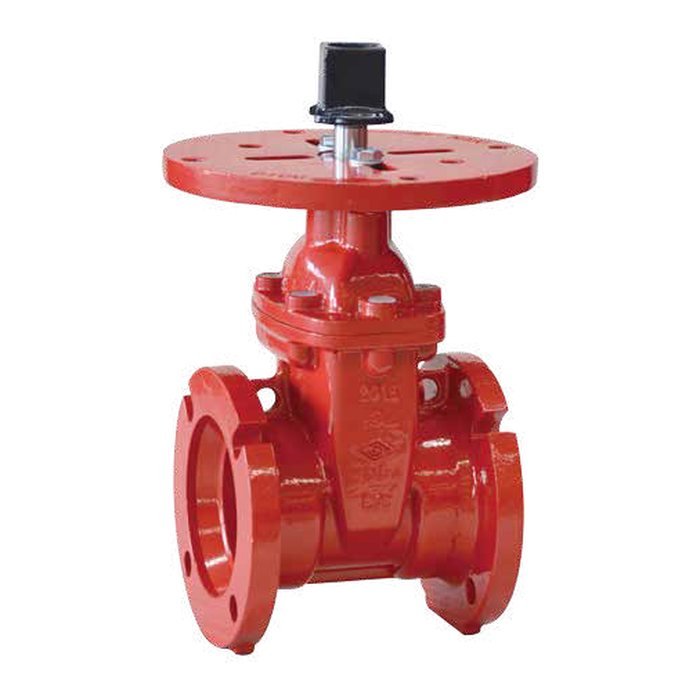
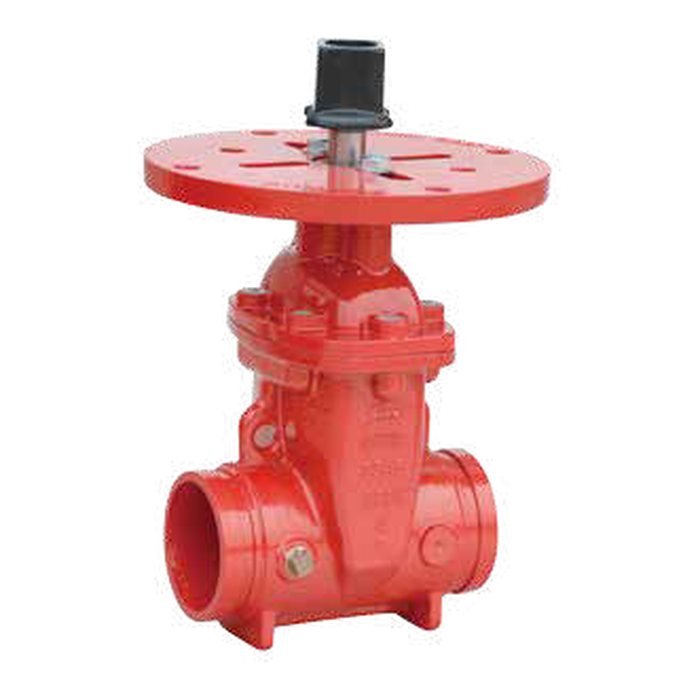
- It fits a non-rising stem (NRS) gate valve with a top flange for the post.
- MECH IP and WP indicator posts are UL Listed and FM Approved.
How the vertical post works
The buried valve is a non-rising stem (NRS) gate valve with a dedicated top flange. The indicator post is fitted above it so that its square shaft reaches the valve’s operating nut. Turning the handle at the top of the post operates the valve, and an internal target moves with it to show OPEN or SHUT in the window. The handle is padlocked against tampering, and a supervisory switch can be added to signal any change of position.
Components of the MECH IP post
| Part | Material |
|---|---|
| Body, top section and base flange | Ductile iron ASTM A536 65-45-12 |
| Standpipe | Carbon steel ASTM A53 |
| Operating stem (1″ square) | Carbon steel AISI 1045 |
| Operating nut | Stainless steel AISI 304 |
| Window | Clear plastic (Plexiglas) |
| Gasket | EPDM |
The datasheet lists two target carrier nuts by valve size: for DN100–400 and DN450–600 valves. Details on the IP post page.
The WP wall post
It is used where the valve is inside a room or behind a wall and must be operated and its position read from outside. It is mounted on the wall, operated by a handwheel, and shows the valve’s state in its window. Its body is cast iron ASTM A126 Class B with a ductile iron handwheel, and it carries an epoxy coating to AWWA C550. See the WP post page.
Suitable valves
The post needs an NRS gate valve with a top flange for the indicator post. From MECH:
Installation
Warning
The standpipe length is set by the depth of the valve below ground, and the shaft must reach the valve nut without the post’s weight bearing on it. Set the target to the valve’s actual position (fully open / fully shut) before locking.
- Install the valve in the line and check its top flange is level.
- Measure from the valve flange to finished ground level, and cut the standpipe to the manufacturer’s instructions.
- Fit the post and shaft, then operate the valve fully open and fully shut and confirm the window shows the correct position.
- Leave the valve open, padlock the handle, and fit the supervisory switch where provided.
Frequently asked questions
What is the difference between a PIV and an IP?
PIV (Post Indicator Valve) is the general name for a valve with an indicator post. IP is MECH’s model name for its vertical indicator post.
Can an OS&Y valve be used instead of a post?
An OS&Y valve shows its own position, but it needs a chamber or pit where it can be seen. A directly buried valve needs an indicator post.
Is a supervisory switch required on the post?
It depends on the project requirements. Supervising every isolation valve by switch or lock is the usual requirement in fire systems.
References
- NFPA 24 — Standard for the Installation of Private Fire Service Mains and Their Appurtenances.
- AWWA C550 — Protective Interior Coatings for Valves and Hydrants.
- NFPA 13 — Standard for the Installation of Sprinkler Systems.
Materials are from the MECH datasheet; installation steps are general practice, and the manufacturer’s instructions are the reference.
Part of a complete guide
This article is part of Approving Fire Protection Materials in Saudi Arabia: From the Consultant to Civil Defense.