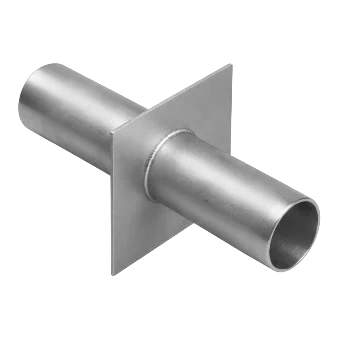
The Fu-Mech pipe sleeve (model FU-SLV) is fabricated to order to complete tank, pump-room and civil pipework packages. This guide covers where it is used, the critical point in selecting and installing it, and how to order.
At a glance
- Leaves a ready opening for a pipe to pass through later.
- The pipe-to-sleeve gap is sealed after installation.
- Length to suit the wall or slab thickness.
- For water-retaining walls a puddle flange is usually preferred.
What is it?
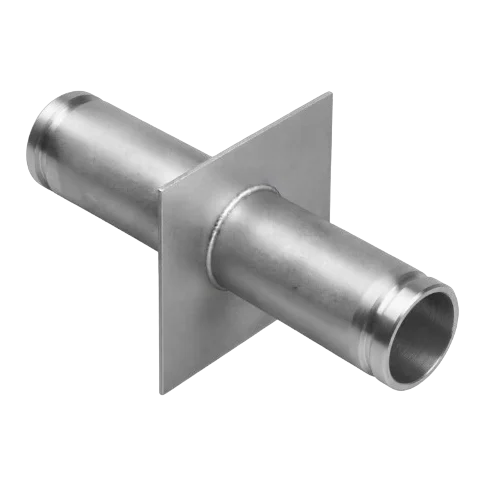
A sleeve cast into a wall or slab to leave an opening for a pipe to pass through later; the gap between pipe and sleeve is then sealed. It suits services installed after the concrete work.
Where it is used
- Pipe penetrations through walls and slabs.
- Services installed after the concrete work.
- Civil and building works.
Sleeve or puddle flange?
In water-retaining walls, with a fixed pipe position, a puddle flange is usually the better choice because it is cast in with the pipe itself and cuts the water path. A sleeve suits penetrations that need flexibility for later installation, and its watertightness depends on the seal between pipe and sleeve.
Caution
Check sizes, flange standard and lengths against the approved piping drawing before fabrication; made-to-order items are built to the data you send.
Fu-Mech fabricated fittings
| Item | Code |
|---|---|
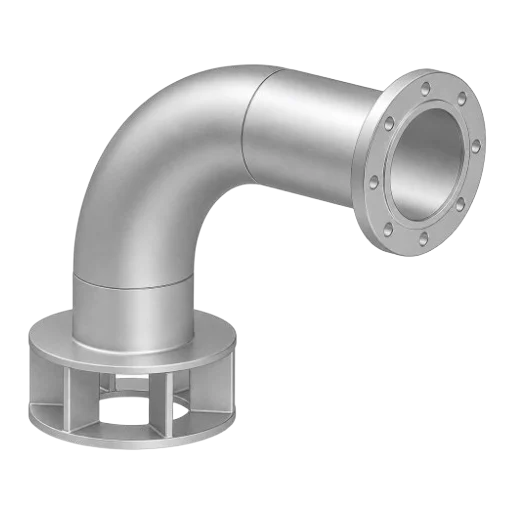
| Duck foot bend 90° | FU-DFU |
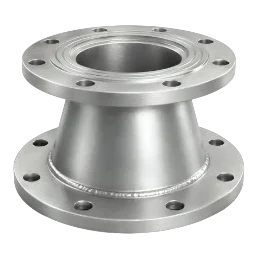
| Flanged concentric reducer | FU-CON |
| Flanged eccentric reducer | FU-ECC |
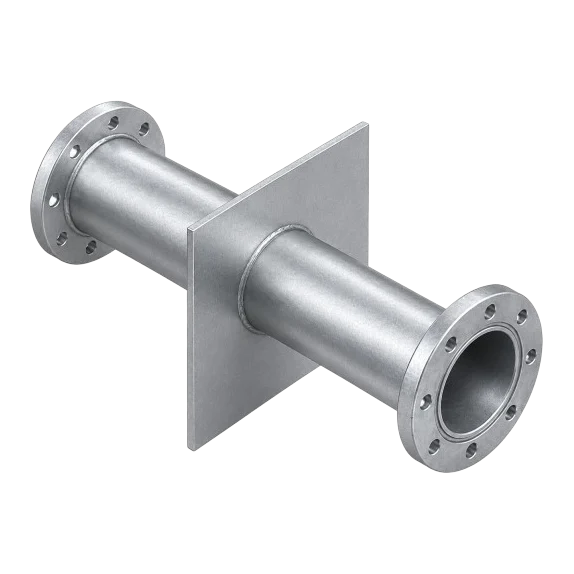
| Double flanged pipe | FU-DFP |
| Pipe sleeve — this product | FU-SLV |
Flanged fittings and wall sleeves fabricated to complete tank, pump-room and civil pipework packages. Made to your drawing: need a non-standard size, length or end connection? Send us your drawing for a quotation.
How to order
Use the “Build your order” section on this page: add every model, size and quantity, then send the whole order by email or WhatsApp. It reaches us as a tidy PDF request sheet and we contact you with the quotation.
- Model code FU-SLV
- Size (DN)
- Wall or slab thickness
- Quantity, and the drawing if the item is non-standard
Frequently asked questions
Does a sleeve stop leaks in water tanks?
Watertightness with a sleeve depends on the seal between pipe and sleeve and how well it is installed. That is why a puddle flange is usually preferred in water-retaining walls with a fixed pipe position.
What size sleeve do I need for my pipe?
The sleeve is larger than the pipe passing through it, leaving room for installation and the seal. Give us the pipe size and the seal type approved for the project and we propose the sleeve size.
Do you make non-standard items?
Yes. We fabricate non-standard sizes, lengths and end connections to the project drawing. Send the drawing and we send a quotation.
What should I send for a quotation?
Model code FU-SLV, Size (DN), Wall or slab thickness, Quantity, and the drawing if the item is non-standard.
References
- Fu-Mech catalogue — Edition 08/2026 — Other fittings
This guide is general information to help with selection and ordering. Final design, sizes and positions are set by the project’s approved designer; the project specification and the consultant’s drawings govern. Specifications may vary by project; datasheets and drawings are available on request.