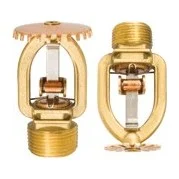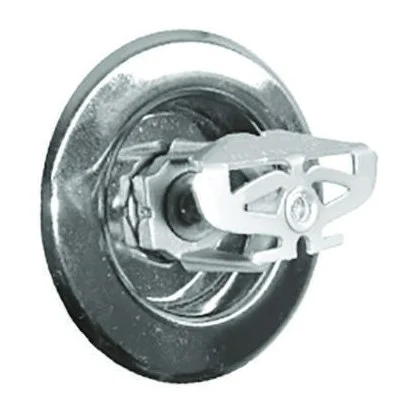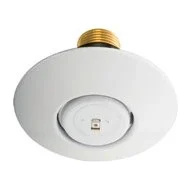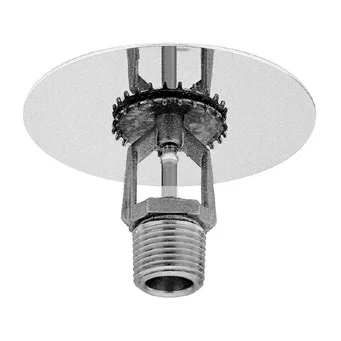
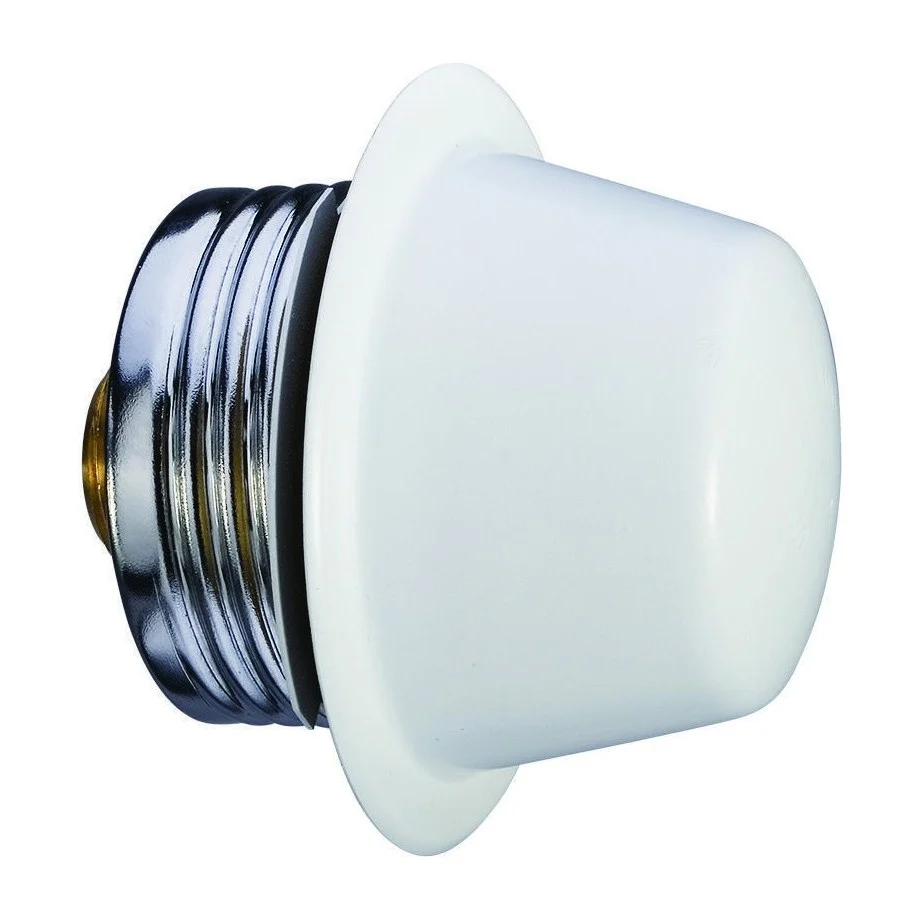
The TYCO TY4332 is the concealed horizontal sidewall model of the CHEC series, with a K 8.0 discharge coefficient and 3/4″ NPT thread, quick response and extended coverage, operated by a glass bulb 3 mm. It is designed for architecturally sensitive light hazard areas such as hotel rooms, dormitories, offices and hospitals, with extended coverage. Installed within the wall with only a flat cover plate visible. For where the sprinkler sits in the whole system, see the complete guide to sprinkler systems in Saudi Arabia.
In short
- Model (SIN): TY4332 — Concealed Horizontal Sidewall.
- Discharge coefficient K 8.0, 3/4″ NPT connection.
- Glass bulb 3 mm, quick response.
- Temperature ratings in the datasheet: 68°C sprinkler with 59°C cover plate.
- Maximum working pressure: 175 psi (12.1 bar).
- Series approvals: UL, C-UL, NYC. The approval of each model, finish and rating is in the approvals table of datasheet TFP265.
How this sprinkler works
The glass bulb contains a fluid that expands when exposed to heat. When the rated temperature is reached, the fluid expands enough to shatter the bulb, the sprinkler opens and the deflector spreads the water over the fire area.
In a concealed sprinkler the flat cover plate is soldered to the retainer at three points with a solder rated lower than the sprinkler. Fire heat first drops the cover plate, the deflector drops on its guide pins to the operating position, then the sprinkler operates at its own rating.
Installed within the wall with only a flat cover plate visible. Quick response means the thermal element reacts faster, so the sprinkler operates earlier than a standard-response sprinkler of the same rating.
Models in the series
| SIN | Orientation | K-factor | Thread |
|---|---|---|---|
| TY4332 — this model | Concealed Horizontal Sidewall | 8.0 | 3/4″ NPT |
Links to the other models are in the “Similar models” table below. The choice of model comes from the hydraulic calculation, hazard classification and installation method in the project design.
Application notes
- A two-piece push-on, thread-off cover design; minimum lateral spacing along a wall and flow requirements are in the datasheet table.
Technical data
| Item | Value |
|---|---|
| Model (SIN) | TY4332 |
| Orientation | Concealed Horizontal Sidewall |
| Discharge coefficient | K 8.0 gpm/psi½ (115.2 L/min/bar½) |
| Thread | 3/4″ NPT |
| Element and response | Glass bulb 3 mm — Quick Response |
| Coverage | Extended Coverage |
| Temperature ratings | 68°C sprinkler with 59°C cover plate |
| Maximum working pressure | 175 psi (12.1 bar) |
| Installation torque | 10 – 20 lb-ft (13.4 – 26.8 N·m) |
| Wrench | W-Type 7 |
| Approvals | UL, C-UL, NYC |
| Datasheet | TYCO TFP265 |
The critical point: centreline and cover
Install with its centreline perpendicular to the back wall and parallel to the ceiling, tighten with the W-Type 7 wrench at 10 – 20 lb-ft, and use only factory-finished CHEC cover plates.
Installation steps
- Inspect before installing: never install a sprinkler whose bulb is cracked or has lost liquid.
- Install the sprinkler in its correct orientation (Concealed Horizontal Sidewall) as shown in the datasheet — never reversed.
- Apply pipe-thread sealant to the threads, then hand-tighten the sprinkler.
- Finish with the specified wrench (W-Type 7) within 10 – 20 lb-ft (13.4 – 26.8 N·m). Higher torque can distort the inlet and cause leakage.
- After the ceiling or wall is finished and the system pressure tested, fit the specified cover plate until its flange touches the surface — never painted.
Common mistakes
- Repainting the cover plate or replacing it with an unspecified one. The sprinkler is listed only with its factory-finished cover plates.
- Installing a sprinkler that was dropped, struck or slipped by the wrench. The datasheet requires any such sprinkler to be replaced.
- Painting or coating sprinklers on site. Sprinklers must not be altered after leaving the factory; altered sprinklers are replaced.
- Hanging objects from sprinklers, or cleaning them with anything other than a gentle feather duster.
Maintenance
Sprinklers that leak or show visible corrosion must be replaced, as must sprinklers exposed to corrosive products of combustion that cannot be fully cleaned. The owner is responsible for inspection, testing and maintenance to NFPA 25 and the authority having jurisdiction, preferably by a qualified inspection service. Before closing a main control valve for maintenance, obtain permission from the proper authorities and notify everyone affected.
Files and ordering
TYCO datasheet TFP265 and the available approval certificates are in the files section of this page. When ordering, state the model TY4332, temperature rating and finish, cover plate. The datasheet lists the part numbers (P/N) for each combination.
How to order
Use the “Build your order” section on this page: add every model and quantity, then send the whole order by email or WhatsApp. It reaches us as a tidy PDF request sheet and we contact you with the quotation.
FAQ
What does TY4332 mean?
It is TYCO’s Sprinkler Identification Number (SIN). It identifies the exact model — orientation, K-factor and thread. The sprinkler is ordered by this number together with temperature rating and finish.
How do I choose the temperature rating?
From the highest expected ceiling temperature and the rating classes in the project’s governing standard, within the ratings available for this model in the datasheet.
Do all models in the series carry the same approvals?
Not always. The approvals table in datasheet TFP265 gives each model’s approvals by rating and finish, so check it when the project requires a specific approval.
What is the benefit of quick response?
The thermal element reacts faster, so the sprinkler operates earlier and limits heat and smoke spread; standards require it in some occupancies such as light hazard.
When does the cover plate drop?
The plate is soldered with a lower-rated solder than the sprinkler, so it drops first in a fire; the deflector then drops and the sprinkler operates at its own rating.
References
- TYCO TFP265 — Series datasheet (attached)
- NFPA 13 — Standard for the Installation of Sprinkler Systems
- NFPA 25 — Inspection, Testing and Maintenance of Water-Based Fire Protection Systems
- TYCO TFP700 — Installer warning for handling and installing sprinklers
This page is general information to help with selection and ordering, taken from the attached TYCO datasheet. Final design is set by the project’s approved designer; the project specification, the consultant’s drawings and the latest datasheet revision govern.