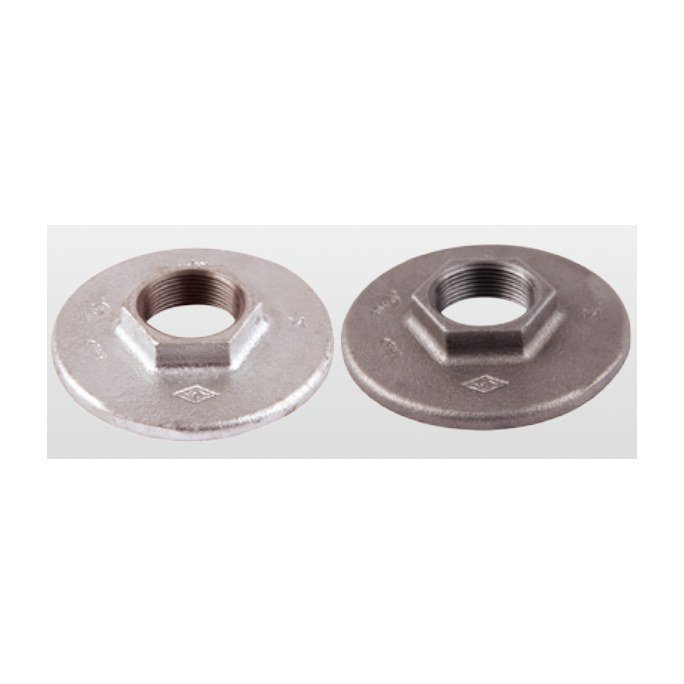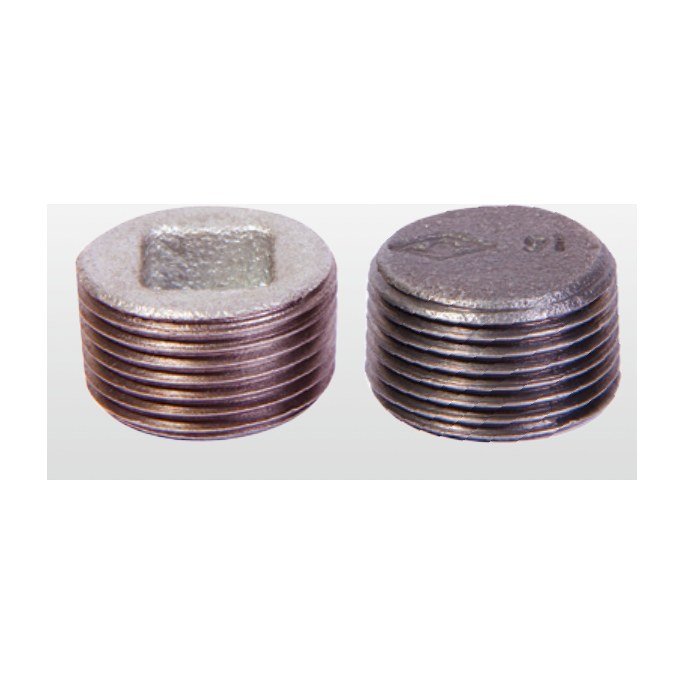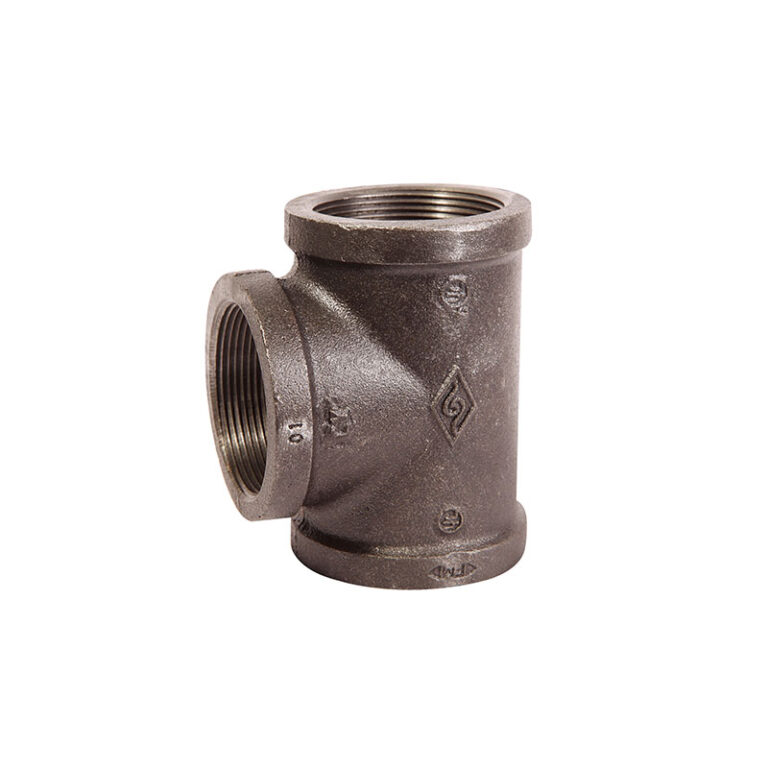
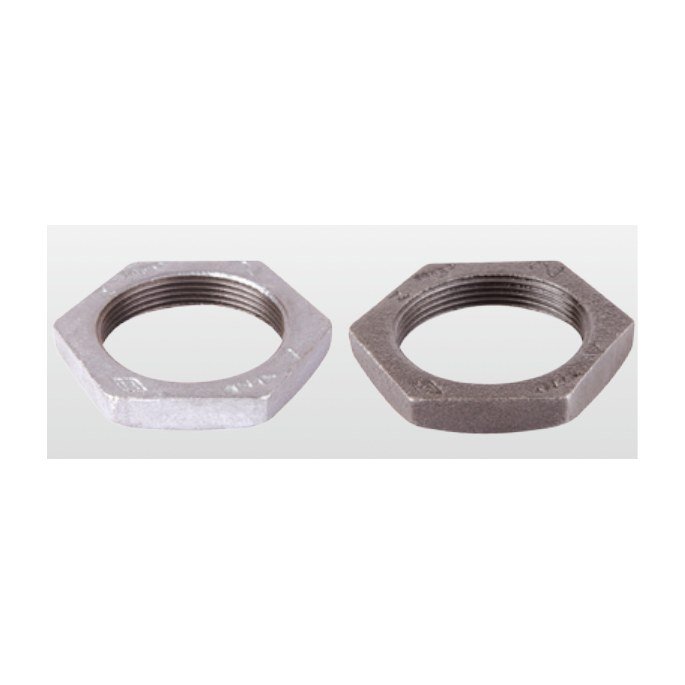
The MECH backnut in black malleable iron, model 312, BS EN 10242 / ISO 49, material BS EN 1562, BSPT threads (ISO 7-1), sizes 1/2″ – 4″, UL rated pressure 500 psig, UL (EX6624) / FM approved. This guide explains what it does, related models, technical data, correct installation and common mistakes.
At a glance
- A locknut and a backnut screw onto a parallel thread to secure a connection passing through a tank wall or panel, or to lock a parallel-thread joint against loosening; they are normally used with a gasket or sealing washer.
- Sizes 1/2″ – 4″, BSPT threads.
- UL rated pressure 500 psig.
- Approvals: UL (EX6624) / FM.
- Equivalent standard model: L12.
What is a locknut and backnut?
A locknut and a backnut screw onto a parallel thread to secure a connection passing through a tank wall or panel, or to lock a parallel-thread joint against loosening; they are normally used with a gasket or sealing washer.
Related models
| Model | Item | Sizes |
|---|---|---|
| 312 — this product | BACKNUT | 1/2″ – 4″ |
| 310 | LOCKNUT | 1/4″ – 4″ |
Technical data
| Item | Specification |
|---|---|
| Standard | BS EN 10242 / ISO 49 |
| Material | Malleable cast iron BS EN 1562 |
| Threads | ISO 7-1 (BSPT) |
| Rated pressure (UL) | 500 psig |
| Approvals | UL (EX6624) / FM |
| Equivalent model | L12 |
| Sizes | 1/2″ – 4″ |
Dimensions for every size are in the size table at the top of the page. Per the MECH catalogue: tensile strength ≥ 350 MPa, elongation ≥ 10%.
Sealing
The nut itself does not seal; sealing comes from the gasket or washer under it, chosen for the fluid.
Caution
Never mix NPT and BSPT threads: the joint may seem to make up but it will not seal and will leak under pressure.
Installation steps
- Make sure pipe and fitting have the same thread (BSPT); never mix NPT and BSPT in one joint.
- Clean and inspect the threads, then apply a suitable sealant (PTFE tape or a thread compound approved for the fluid) to the male thread only.
- Screw the fitting on by hand first, then finish with a wrench for a reasonable number of turns without over-tightening; excessive tightening can split the fitting.
- Support the pipework properly so threaded joints do not carry extra weight or bending.
- Pressure-test the line to the project specification before commissioning.
Common mistakes
- Mixing American NPT and British BSPT fittings in the same line.
- Over-tightening with a wrench or using extension bars, cracking the fitting.
- Wrapping PTFE tape the wrong way or over the first thread, so it enters the line.
- Connecting malleable iron directly to stainless steel or copper without an insulating joint.
Files and ordering
On this page: Product page (catalogue), MECH Malleable Iron Fittings Catalogue (BS Standard), Installation & operation manual, Material Safety Data Sheet (MSDS). Add the product to your request list with size and quantity and we send a quotation. Fu-Mech is the exclusive MECH agent in Saudi Arabia.
Frequently asked questions
Is it used with taper threads?
It is mainly used with parallel threads, such as tank-wall connections and long-screw joints.
Is the thread BSPT or NPT?
This is a BS Standard model with BSPT threads to ISO 7-1. The difference is explained in the guide malleable iron threaded fittings: NPT or BSPT?.
What is the pressure rating?
UL rated pressure 500 psig.
Can they connect to stainless steel or copper pipe?
Per the MECH catalogue, malleable iron threaded fittings must not be connected directly to materials such as stainless steel and copper, because the difference in electrochemical potential causes corrosion. Use a suitable insulating joint.
Are they UL / FM approved?
Yes, per the product data: UL (EX6624) / FM.
References
- BS EN 10242 — Threaded pipe fittings in malleable cast iron
- BS EN 1562 — Founding — Malleable cast irons
- ISO 7-1 — Pipe threads where pressure-tight joints are made on the threads (BSPT)
- MECH catalogue — Malleable Iron Pipe Fittings — BS Standard
This guide is general information to help with selection. Figures come from the product data on this page and the MECH catalogue; final design is by the project’s approved designer.