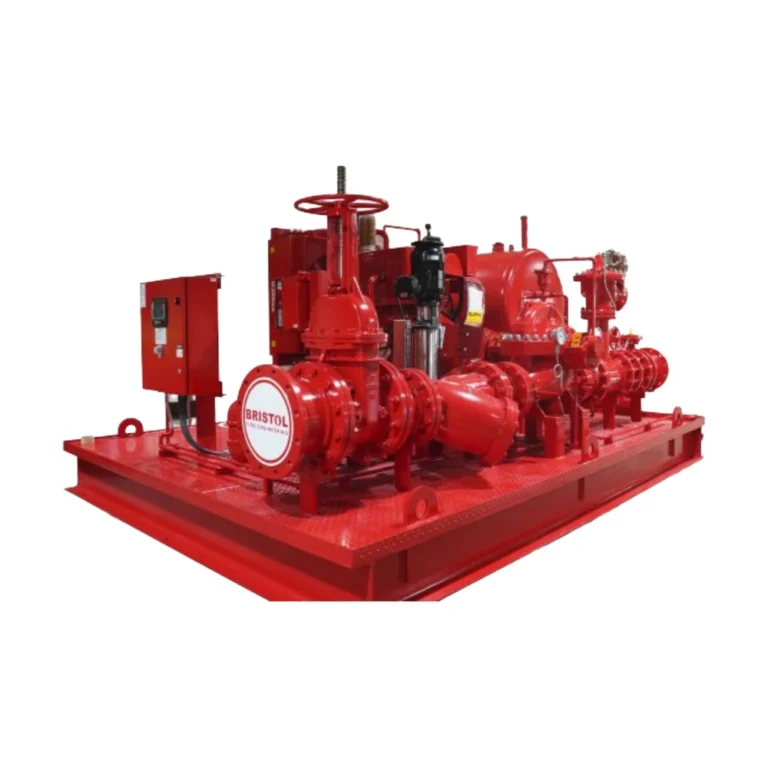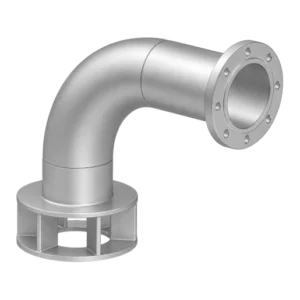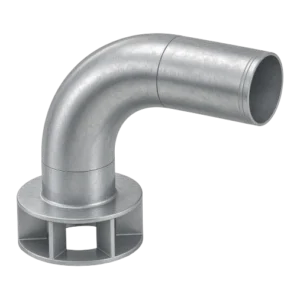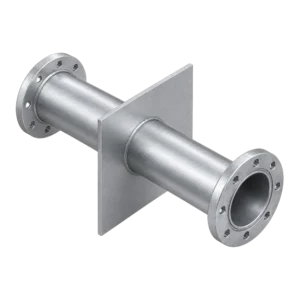
The fire pump is the heart of the system: when the public main cannot give the pressure and flow required, the pump provides them during a fire. The pump type is not chosen on price but on the required flow, where the water source sits relative to the pump, and how it will be maintained. This guide compares the three main types under NFPA 20, with the BRISTOL pumps available from Fu-Mech.
Key points
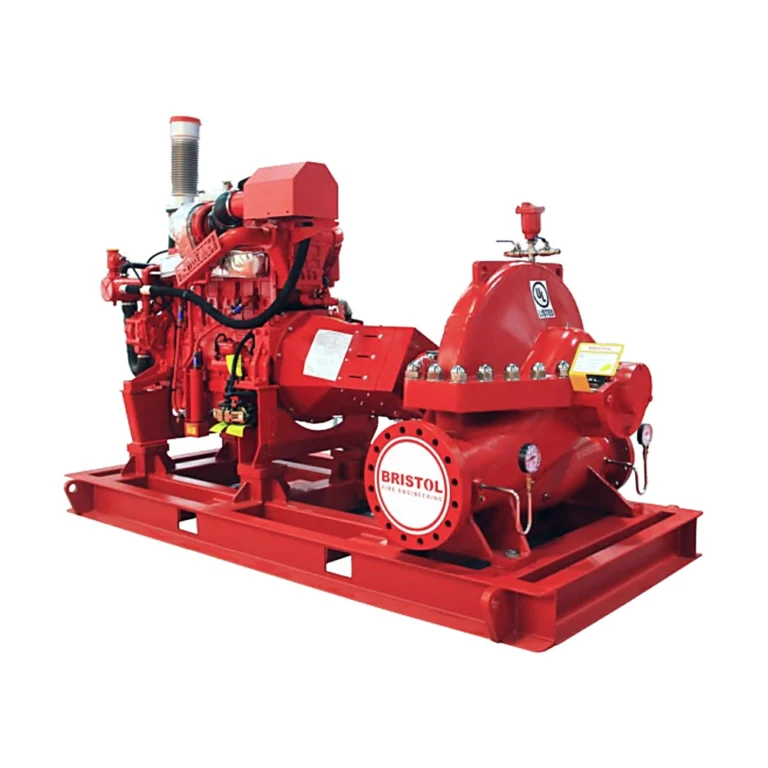
- Split case: for medium and large flows, serviced without disturbing the pipework.
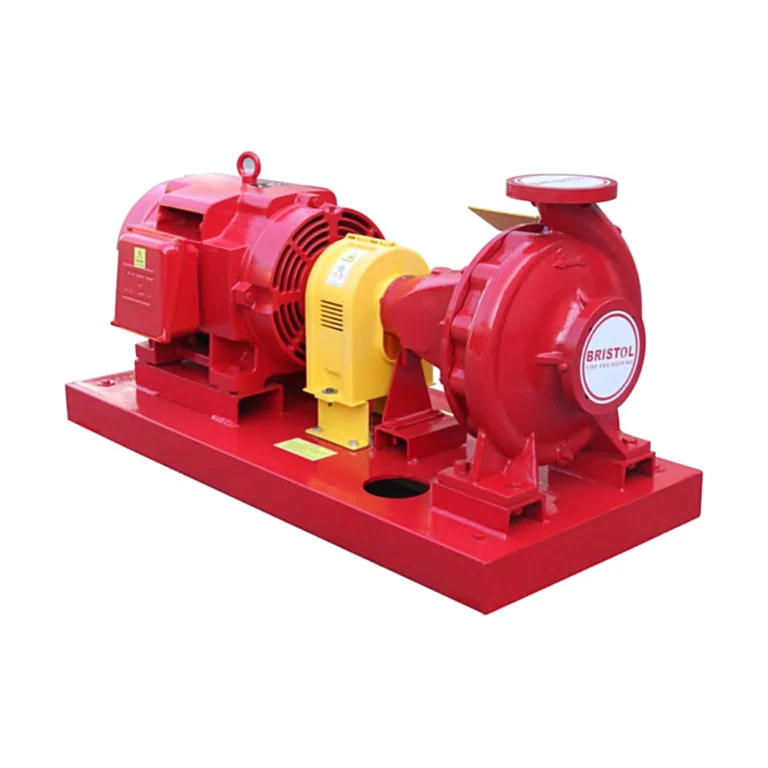
- End suction: compact and economical for smaller flows.
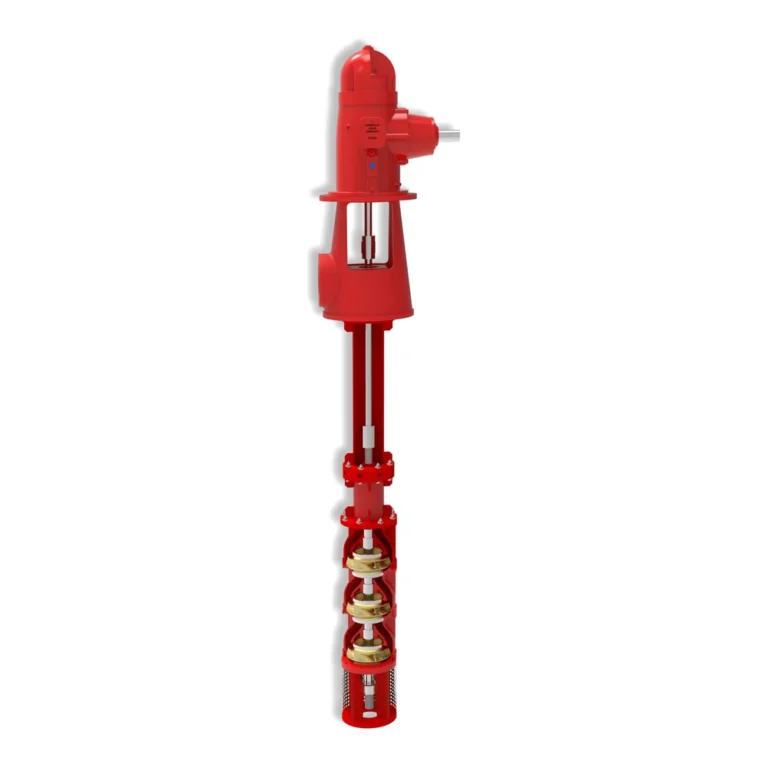
- Vertical turbine: where the water is below the pump.
- A UL listed, FM approved pump is chosen by its listed rating: a specific model, speed and impeller diameter.
- The jockey pump and controller are part of the set.
What decides the type
- Required flow and pressure from the hydraulic calculation.
- Water source position: horizontal pumps need positive suction; where the water is below the pump a vertical turbine is used.
- Driver: electric or diesel, depending on power reliability and the authority’s requirements.
- Space and maintenance: a split case needs more room but is serviced in place.
Comparing the types
| Type | Flow (BRISTOL) | Water source | Maintenance | Best for |
|---|---|---|---|---|
| BSP horizontal split case | 300 – 3000 GPM | Positive suction (tank above the pump) | Casing opens from the top without disturbing pipework | Medium and large flows |
| IS / BEP end suction | 50 – 1000 GPM | Positive suction | Simple, compact design | Small and medium buildings |
| BVP vertical turbine | Up to 1500 GPM | Water below the pump (underground tank or well) | The assembly is lifted out of the tank | Below-grade tanks |
The pump curve in NFPA 20
A fire pump is rated at a flow and pressure point, and its curve must be flat enough: shut-off (churn) pressure does not exceed 140% of rated pressure, and at 150% of rated flow the pressure is not less than 65% of rated. This keeps performance stable if demand exceeds the calculation.
Packaged sets
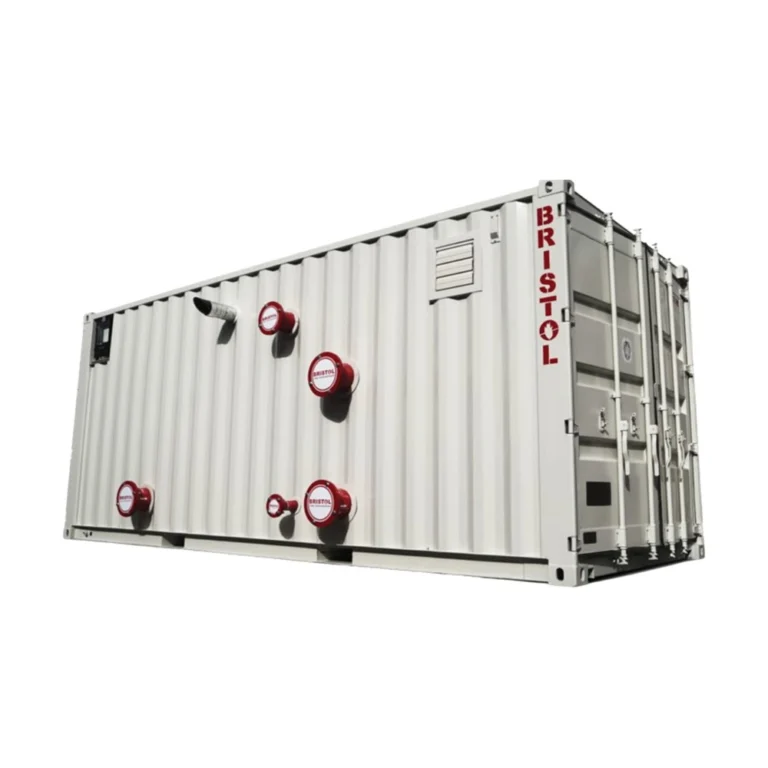
BRISTOL supplies the pump as a packaged set on a skid or a containerised pump house up to 5500 GPM, with the main and jockey pumps, controllers, valves and pipework, shortening the work on site.
The critical point: the listed rating and churn pressure
UL and FM approval covers a specific combination of model, speed and impeller diameter. Oversizing the pump raises the churn pressure, and churn plus suction pressure must not exceed the working pressure of the system components.
Warning
Horizontal pumps are not self-priming. Installed with a tank below them they draw air and fail when needed; in that case a vertical turbine pump is used.
Selection steps
- Take the required flow and pressure from the hydraulic calculation.
- Establish whether the water is above or below the pump.
- Choose the type, then the model whose listed chart covers the rated point.
- Check churn plus suction pressure against the system rating.
- Specify the driver, jockey pump, controller and required approval.
Common mistakes
- Choosing the pump on flow alone, without pressure.
- A suction pipe smaller than the pump inlet or with elbows close to it.
- A concentric reducer on the suction instead of an eccentric one.
- Leaving the controller in manual after a test.
Frequently asked questions
Do I need a standby diesel pump?
It depends on power reliability, the authority’s requirements and the designer. Many projects use an electric main pump and a diesel standby.
What does the jockey pump do?
It makes up small leaks and holds system pressure so the main pump runs only on a real demand.
How often is a fire pump tested?
Under NFPA 25: regular no-flow runs and an annual flow test.
References
- NFPA 20 — Standard for the Installation of Stationary Pumps for Fire Protection
- UL 448 — Centrifugal Stationary Pumps for Fire-Protection Service
- NFPA 25 — Inspection, Testing and Maintenance of Water-Based Fire Protection Systems
- BRISTOL — Fire Pumps catalogue, Issue 6.0
Product information comes from its pages on this site and the manufacturer datasheets; other points are general engineering practice. Final design and selection rest with the project’s approved designer.