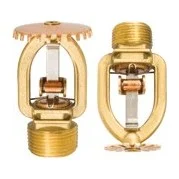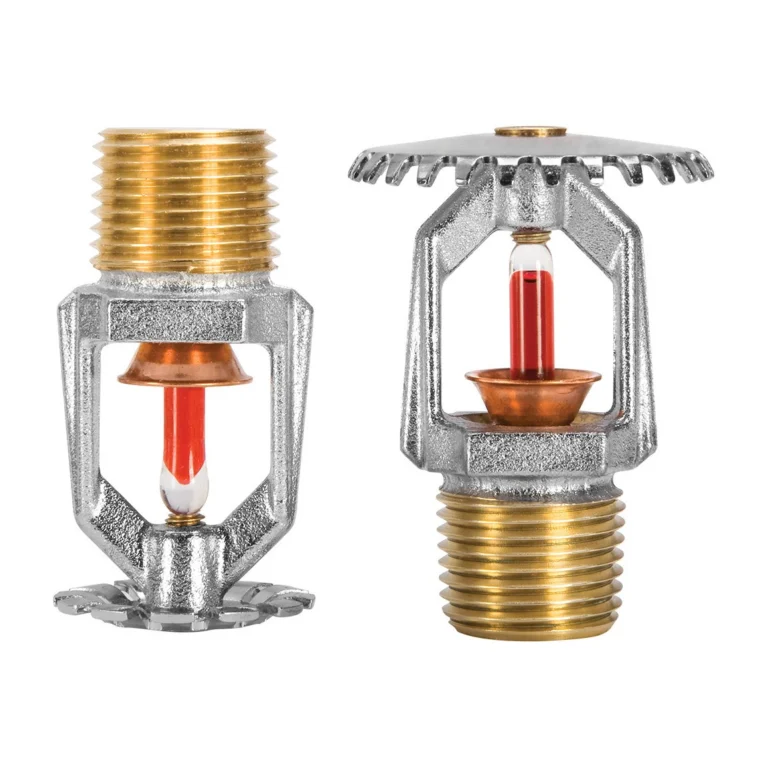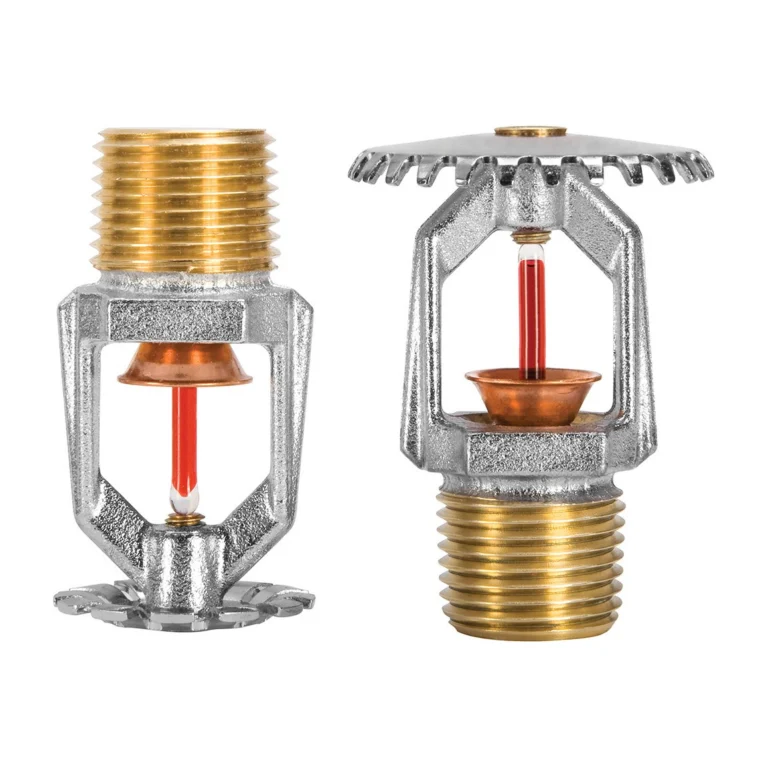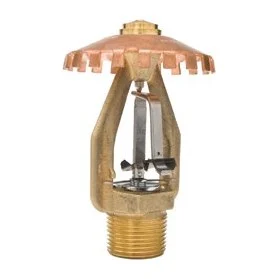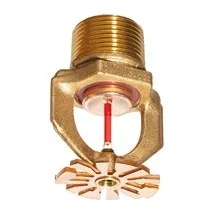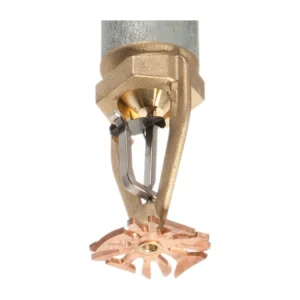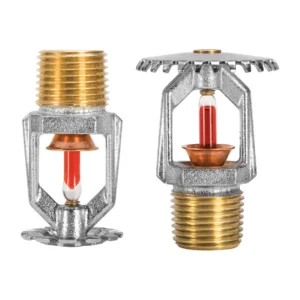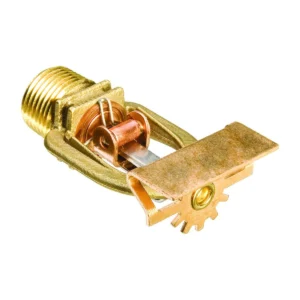
Two sprinklers with the same shape and K-factor can differ in what matters most: when they operate. The response speed of the thermal element and its operating temperature decide the moment water flows, and so the size of the fire at that moment. This guide explains quick versus standard response, how the temperature rating is chosen, and what the bulb colours mean.
Key points
- Quick response: a sensitive element that operates early, with an RTI of 50 or less.
- Standard response: an RTI of 80 or more.
- The temperature rating is chosen above the highest expected ceiling temperature with a suitable margin.
- The bulb colour shows the operating temperature.
- Responses are not mixed in the same space.
What RTI means
The Response Time Index (RTI) measures how fast the thermal element heats up in a stream of hot gas. The smaller the number, the faster the element. A quick-response sprinkler has a slim element (a small-diameter bulb or a light link), so it heats faster and operates while the fire is smaller.
When each response is used
- Quick: light hazard spaces such as offices, hotels and hospitals, where early operation helps life safety; NFPA 13 requires them in light hazard occupancies, with limited exceptions.
- Standard: many ordinary, extra hazard and storage areas, according to the design.
- The final choice follows the standard and the approved project design.
Temperature ratings and bulb colours
| Classification | Temperature | Bulb colour |
|---|---|---|
| Ordinary | 57 °C | Orange |
| Ordinary | 68 °C | Red |
| Intermediate | 79 °C | Yellow |
| Intermediate | 93 °C | Green |
| High | 141 °C | Blue |
| Extra high | 182 °C | Purple |
| Very extra high | 204 – 260 °C | Black |
As a general rule, ordinary ratings are used in most spaces, and intermediate or high ratings near heat sources such as boiler rooms, below skylights and under uninsulated roofs, according to the standard’s tables.
Examples from TYCO sprinklers
| Series | Response | Element |
|---|---|---|
| TY-L | Standard | Solder link (74 / 100 / 138 °C) |
| TY-B | Standard | Glass bulb |
| TY-FRB | Quick | Glass bulb |
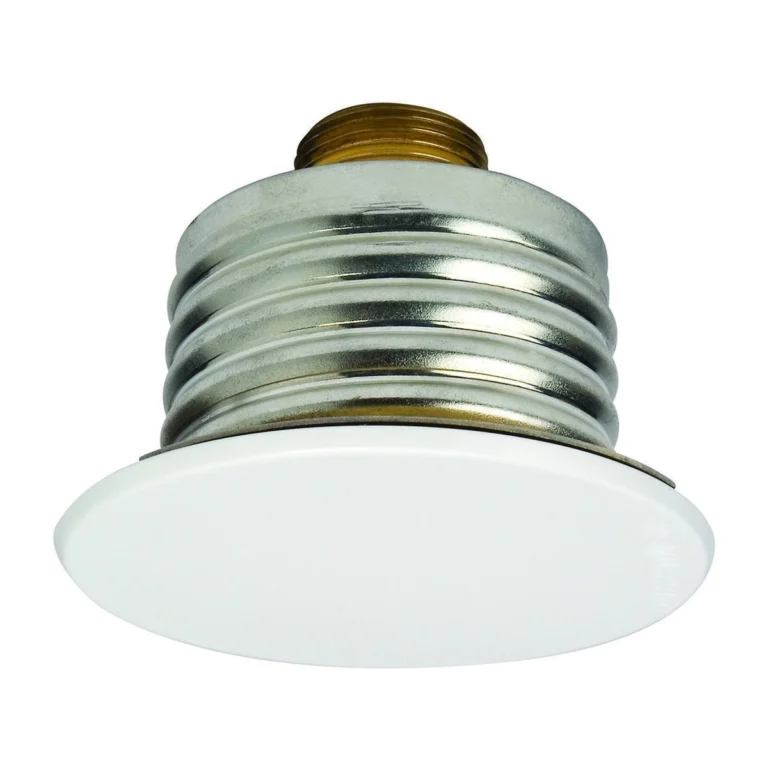
| RFII | Quick or standard by model | Concealed, with cover plate |
The critical point: consistency and replacement
Within one space sprinklers must share the same response, because mixing quick and standard can make a remote head operate before the one nearest the fire. Replacements use the same model, K-factor, temperature rating and response.
Warning
Spare sprinklers in the cabinet must match those installed, by type and rating, with the wrench for each type.
Selection steps
- Establish the hazard classification of each space.
- Choose the response under the standard and the design.
- Estimate the highest ceiling temperature and choose the operating rating.
- Keep response and rating consistent within each space.
- Provide matching spare sprinklers.
Common mistakes
- An ordinary-rated sprinkler above an oven or boiler.
- Quick and standard response mixed in one room.
- Painting or covering sprinklers during decoration, which alters their response.
- Spare sprinklers with a different rating.
Frequently asked questions
Is quick response always better?
Not always. It is required in light hazard, but some storage and extra hazard designs are based on standard response.
Does the colour show the response speed?
No, the colour shows only the temperature rating. Response speed is shown by the element size and the datasheet.
What if a bulb breaks without a fire?
Replace the sprinkler at once with the same model and look for the cause, such as impact or nearby heat.
References
- NFPA 13 — Standard for the Installation of Sprinkler Systems
- ISO 6182-1 — Requirements and test methods for sprinklers
- UL 199 — Automatic Sprinklers for Fire-Protection Service
- TYCO — Datasheets TFP110, TFP151, TFP171 and TFP181
Product information comes from its pages on this site and the manufacturer datasheets; other points are general engineering practice. Final design and selection rest with the project’s approved designer.
Part of a complete guide
This article is part of The Complete Guide to Sprinkler Systems in Saudi Arabia: Types, Components and Testing.