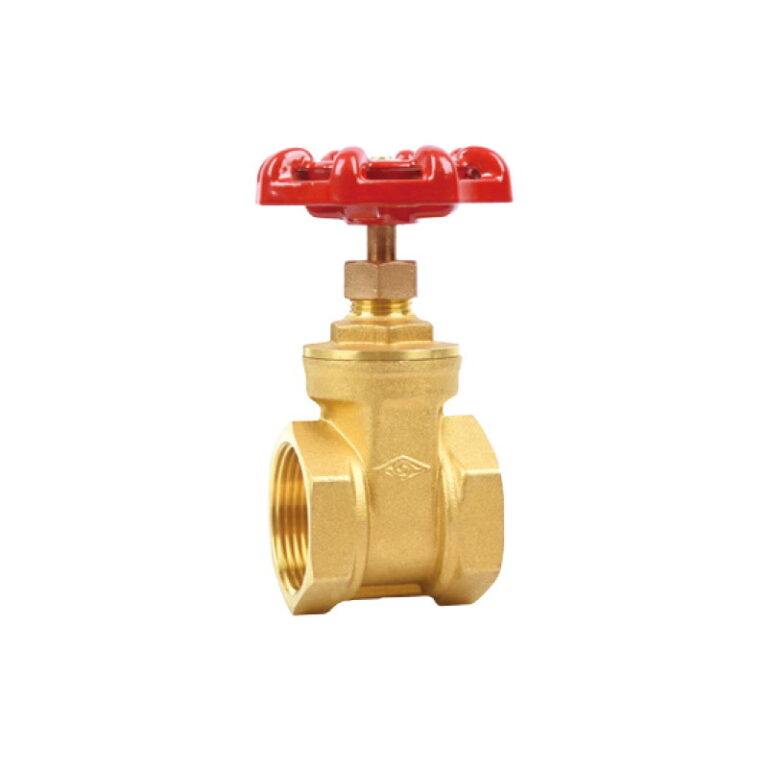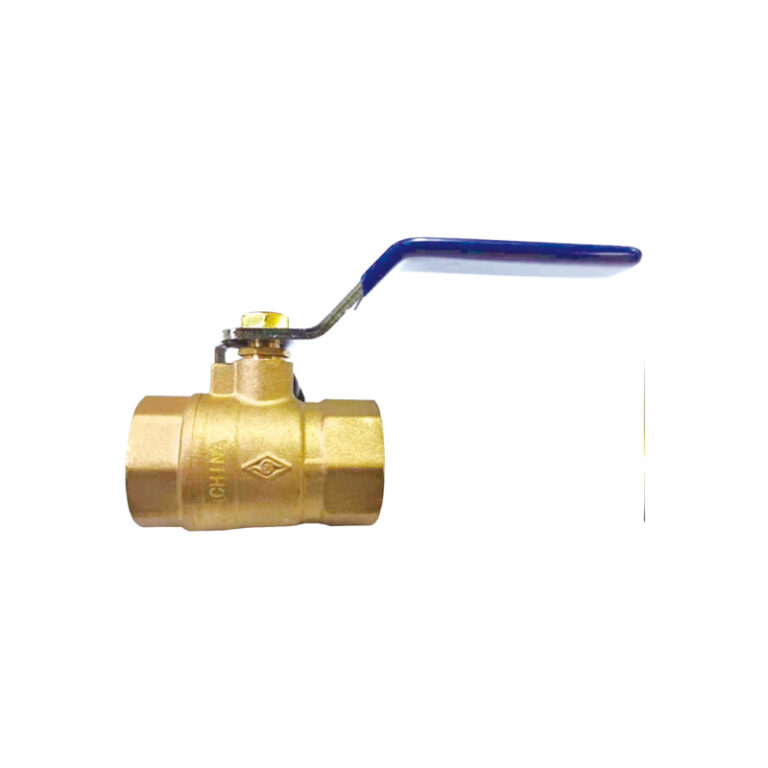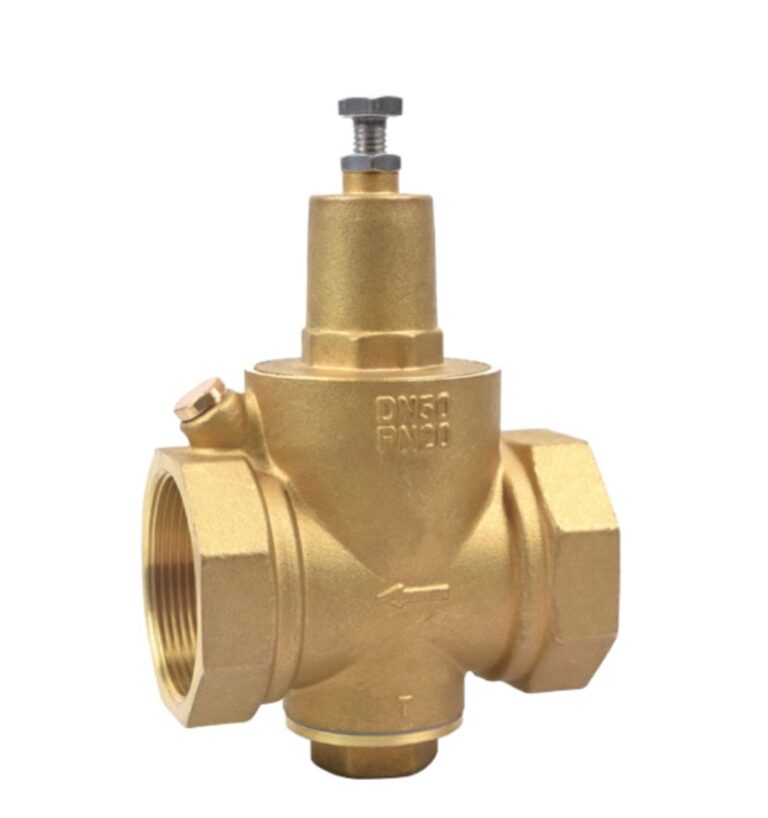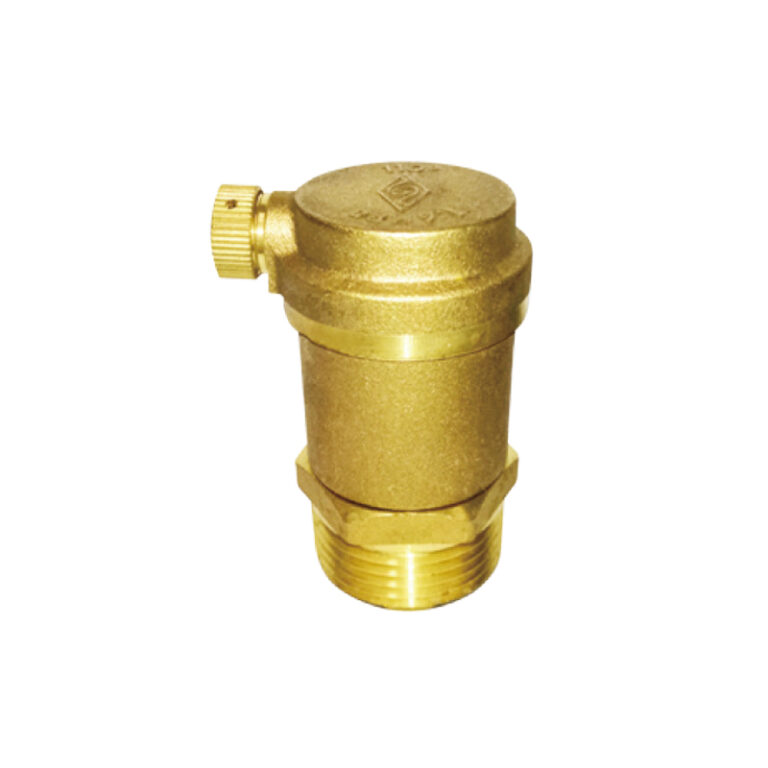

The MECH brass swing check valve, model H14W-431A, sizes 1/2″ – 2″ (DN15 – DN50), working pressure 300 PSI. It prevents backflow on small lines. This guide explains what it does and how it works, related models, technical data, the critical point in selection and installation, and common mistakes. For more, read the guide check valves.
At a glance
- A check valve opens under flow and closes automatically when flow reverses.
- Sizes 1/2″ – 2″ (DN15 – DN50).
- Working pressure 300 PSI.
- Connection: Threaded NPT — ASME B1.20.1.
- Operating temperature: 0 – 100 °C.
Brass check valve: what it does and how it works
A check valve opens under flow and closes automatically when flow reverses. The swing type has a hinged clapper and is normally installed horizontally; the in-line type has a spring-loaded disc and can be fitted in more orientations.
It is used after small pumps and on feed and heater lines to prevent backflow.
Related models
| Model | Product | Sizes | Pressure | Approvals |
|---|---|---|---|---|
| H14W-431A — this product | BRASS SWING CHECK VALVE | 1/2″ – 2″ (DN15 – DN50) | 300 PSI | — |
| H12X-403A | BRASS IN-LINE CHECK VALVE | 1/2″ – 2″ (DN15 – DN50) | PN16 | — |
Technical data
| Item | Specification |
|---|---|
| Design standard | GB/T 8464-2008 |
| Connection ends | Threaded NPT — ASME B1.20.1 |
| Working pressure | 300 PSI |
| Temperature range | 0 – 100 °C |
| Body material | Brass CW617N |
| Sizes | 1/2″ – 2″ (DN15 – DN50) |
Direction and orientation
The arrow points with the flow. A swing check goes horizontal or vertical with upward flow only; an in-line check per the model instructions.
Caution
Fit a strainer upstream if the water carries debris, as it stops full closure.
Installation steps
- Check the thread type (ISO 228 parallel or NPT / ISO 7-1 taper) matches the pipe, and use the sealant or gasket suited to that thread.
- Hold the valve with the wrench on the end being tightened, not on the body or handle.
- Do not over-tighten, so the brass body is not distorted.
- Operate the valve after installation to check movement and sealing.
Common mistakes
- Mixing parallel and taper threads.
- Tightening by the valve body or handle.
- Over-tightening the brass body.
Files and ordering
On this page: Product datasheet, MECH Brass Valves Catalogue. Add the product to your request list with size and quantity and we send a quotation, or build a submittal PDF for the consultant. Fu-Mech is the exclusive MECH agent in Saudi Arabia.
Frequently asked questions
Swing or in-line?
A swing check has a hinged clapper and lower pressure loss; an in-line check is spring-loaded, closes faster and accepts more orientations.
Where is it installed?
After pumps and on feed lines to prevent backflow.
What is the working pressure of model H14W-431A?
300 PSI per the product data. The pressure for each size or listed model is in the size table and datasheet.
What end connection does it have?
Threaded NPT — ASME B1.20.1. Choose the connection that matches the adjacent pipe and fittings.
References
- ASME B1.20.1 — Pipe Threads, General Purpose, Inch (NPT)
- MECH catalogue — MECH brass valves
This guide is general information to help with selection. Figures come from the product data on this page and the MECH catalogue; final design is by the project’s approved designer to the applicable standards and the project specification.