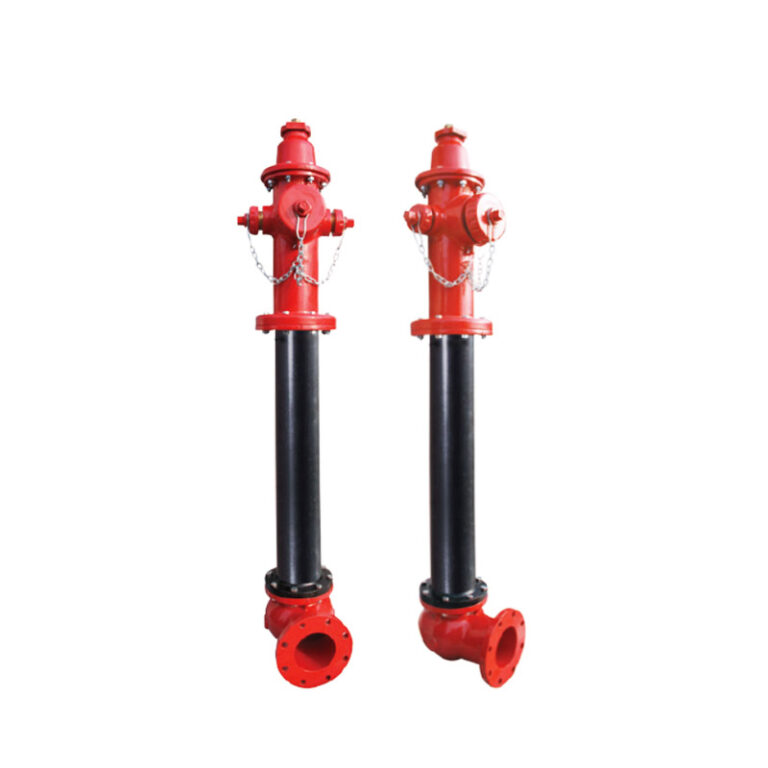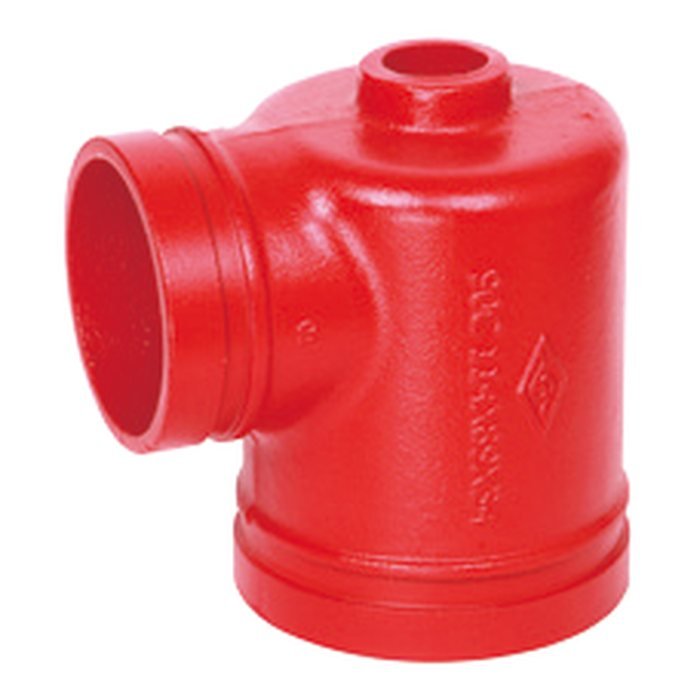
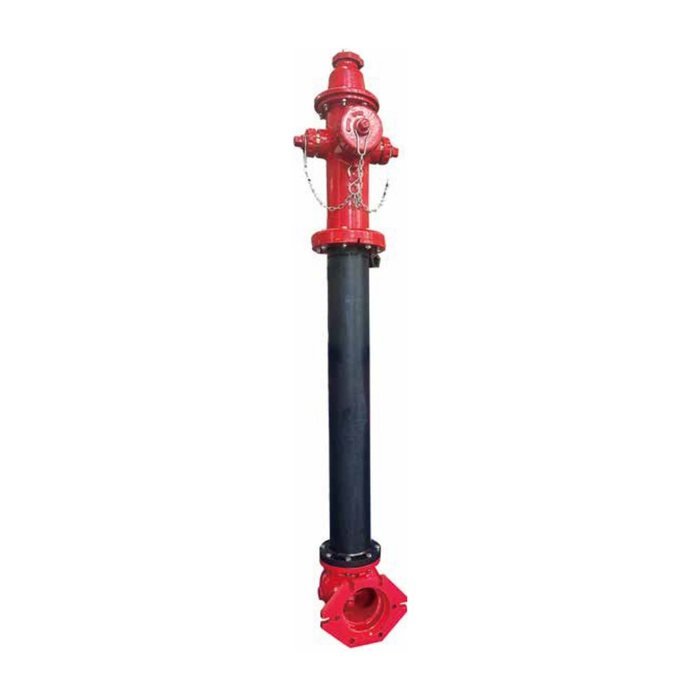
An outdoor fire hydrant is the point where fire crews connect to the water network around a building or site. There are two main types: the wet barrel, whose body stays full of water, and the dry barrel, whose valve sits below ground and whose body stays empty. The choice depends on climate, installation and maintenance.
Key points
- Wet barrel (AWWA C503): water in the body at all times, with a valve for each outlet.
- Dry barrel (AWWA C502): the main valve is below ground, and water drains from the body after closing.
- MECH models: SSZ2 wet barrel, and SSF-J dry barrel with mechanical joint, both 300 PSI and listed to UL 246.
- Usual outlets: two 2-1/2″ hose outlets and one 4-1/2″ pumper outlet.
How a wet barrel hydrant works
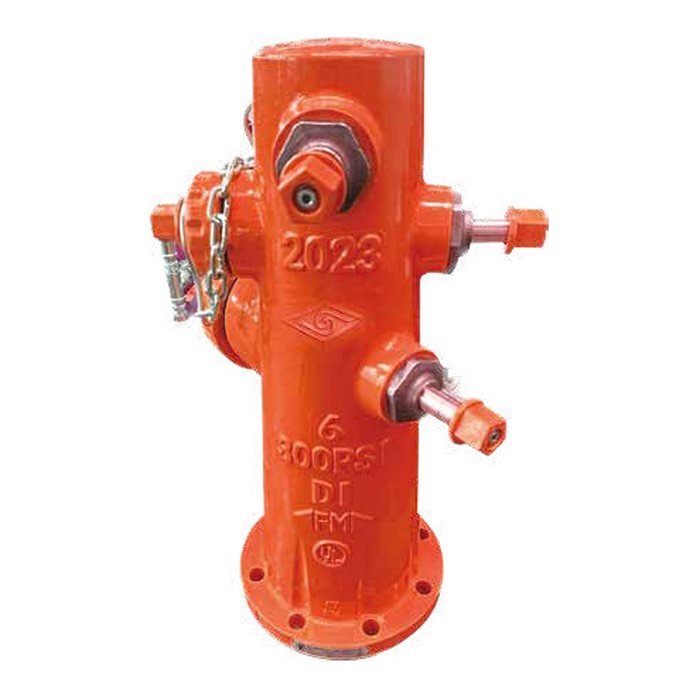
The above-ground body is connected directly to the main and always full of water under pressure. Each outlet has its own valve and opens independently, so a hose can be connected to one outlet while the other stays shut. It is simpler and delivers water immediately, but it does not suit places where water freezes.
How a dry barrel hydrant works
The main valve is at the base of the hydrant below ground and is operated by a stem from the top. On closing, the water left in the body drains through a drain opening, so the body stays empty. It was designed to resist freezing, and one advantage is that breaking the above-ground body in an accident does not release water, because the valve is buried.
Comparison
| Item | Wet | Dry |
|---|---|---|
| Standard | AWWA C503 | AWWA C502 |
| Water in the body | Always | Only when operating |
| Valve | One per outlet | One main valve below ground |
| Freezing | Not suitable | Suitable |
| If the body is broken in an accident | Water flows until the line valve is closed | No flow, as the valve is buried |
| MECH model | SSZ2 | SSF-J and the flanged dry hydrant |
MECH model data
- SSZ2 wet barrel: ASME B16.42 CL150 flange, 300 PSI working pressure, approvals UL 246 / FM 1511 / NSF/ANSI 61.
- SSF-J dry barrel: AWWA C111 mechanical joint for buried mains, NFPA 1963 outlet threads, 300 PSI working pressure (200 / 250 on request), approvals UL 246 / FM 1510 / NSF/ANSI 61.
- Both carry FBE epoxy coating inside and out to AWWA C550, with a 6″ inlet.
The critical detail: outlet threads
Warning
Hydrant outlet threads must match the hose couplings of the local fire service. Check the thread type required on the project before ordering; a hydrant with a different thread is useless in a fire.
What suits Saudi Arabia?
Since freezing is not an issue in most of the Kingdom, wet barrel hydrants are widely used for their simplicity. Dry barrels are chosen where the specification prefers them, where hydrants risk vehicle impact in car parks and roads, or in cold highland areas. The decision follows the project specification and the authority having jurisdiction.
Frequently asked questions
Does a hydrant need an isolation valve?
Yes; a gate valve is usually installed on the hydrant branch so it can be isolated for maintenance without shutting the network.
What is the large 4-1/2″ outlet for?
For connecting the fire engine (the pumper outlet); the two small outlets are for hoses.
How does a dry barrel hydrant drain after closing?
It drains automatically through the drain opening when fully closed; the groundwater level must not be above the opening.
References
- AWWA C502 — Dry-Barrel Fire Hydrants.
- AWWA C503 — Wet-Barrel Fire Hydrants.
- UL 246 — Hydrants for Fire-Protection Service.
- NFPA 24 — Standard for the Installation of Private Fire Service Mains and Their Appurtenances.
Model data is from MECH product pages; the type is chosen per the project specification and the authority having jurisdiction.
Part of a complete guide
This article is part of The Complete Guide to Sprinkler Systems in Saudi Arabia: Types, Components and Testing.
 NWC approved