When designing or supplying a fire water supply line, one question keeps coming up: OS&Y or NRS gate valve? Both are gate valves and do the same job — open the line fully or close it fully. The difference is in how the stem moves, and that difference decides where each is installed and how it is supervised.
Key points
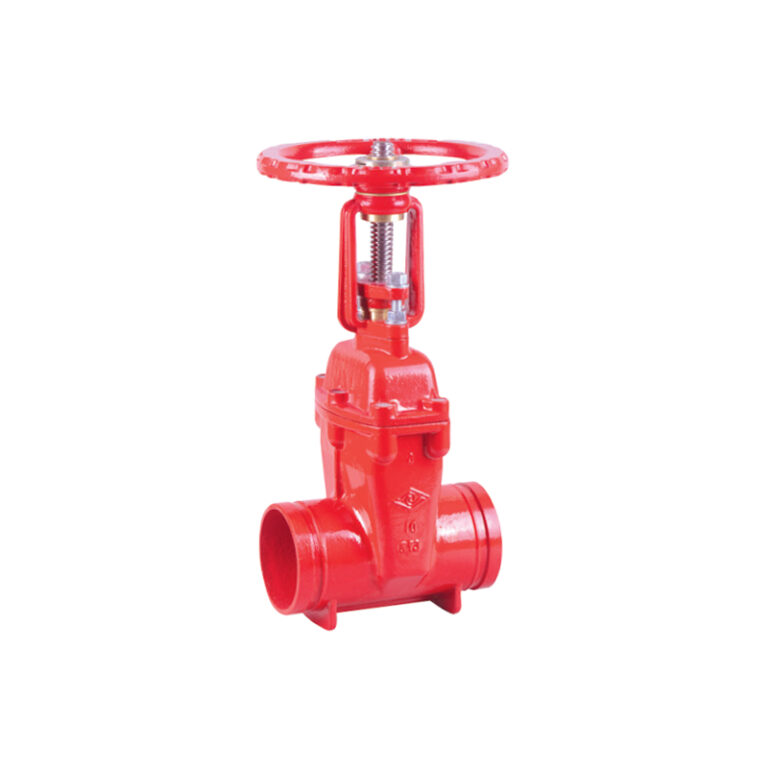
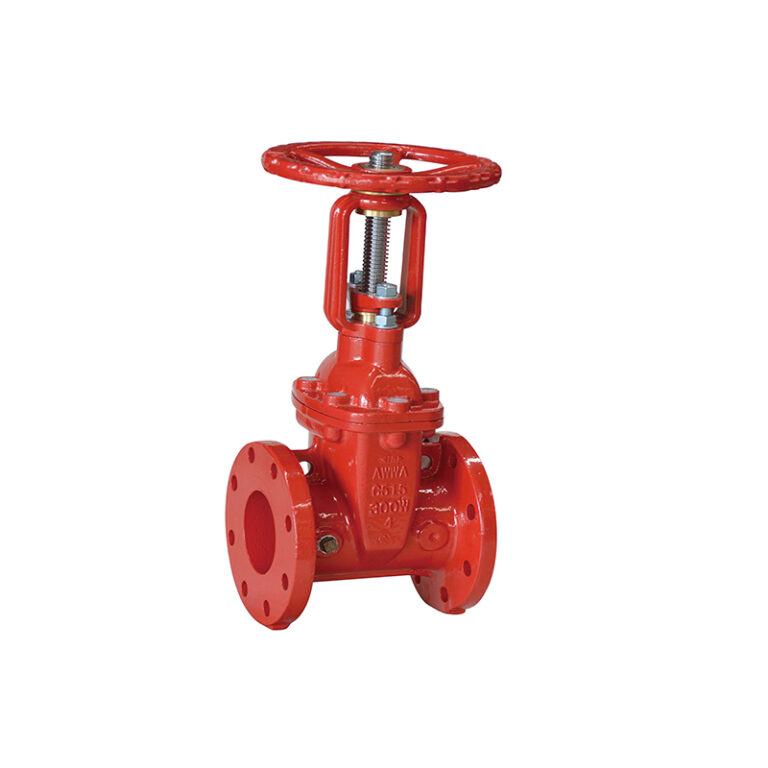
- OS&Y: the stem rises and falls as the valve opens and closes, so its position is visible at a glance. Installed above ground in valve rooms and risers.
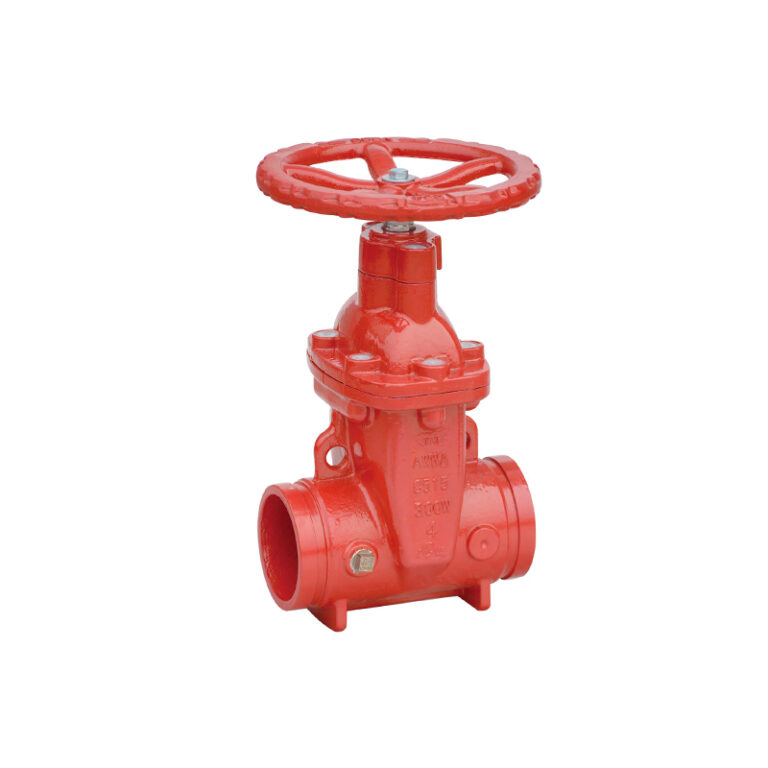
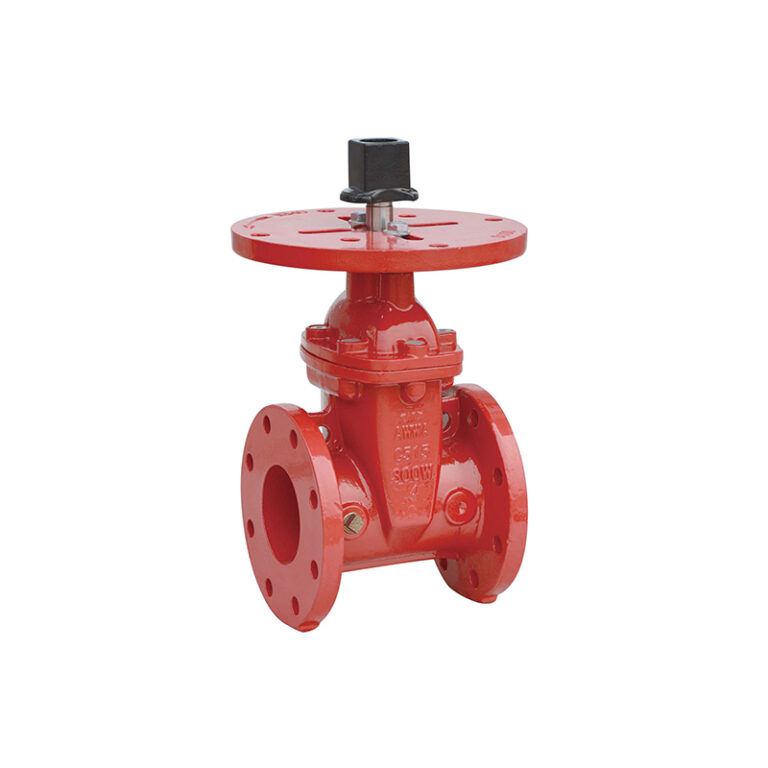
- NRS: the stem turns in place without rising, so the valve is shorter. Usually used underground with an indicator post.
- Fire system control valves must be indicating and supervised, electrically or by locking.
- Both types come with flanged or grooved ends; choose by the line and location.
OS&Y gate valve (rising stem)
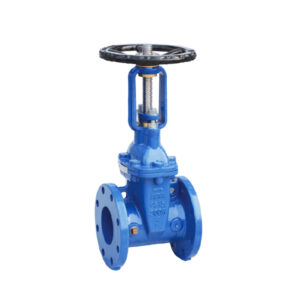
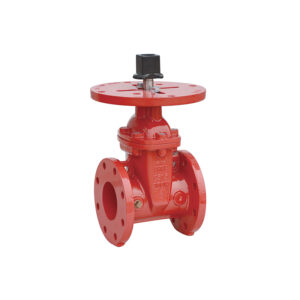
OS&Y stands for Outside Screw & Yoke: the stem thread sits outside the valve body, carried on a yoke. Opening the valve raises the stem above the handwheel; closing lowers it. A glance at the exposed stem tells you whether the valve is open or closed.
- Installed above ground: valve rooms, risers and pump lines.
- Needs extra vertical clearance for stem travel.
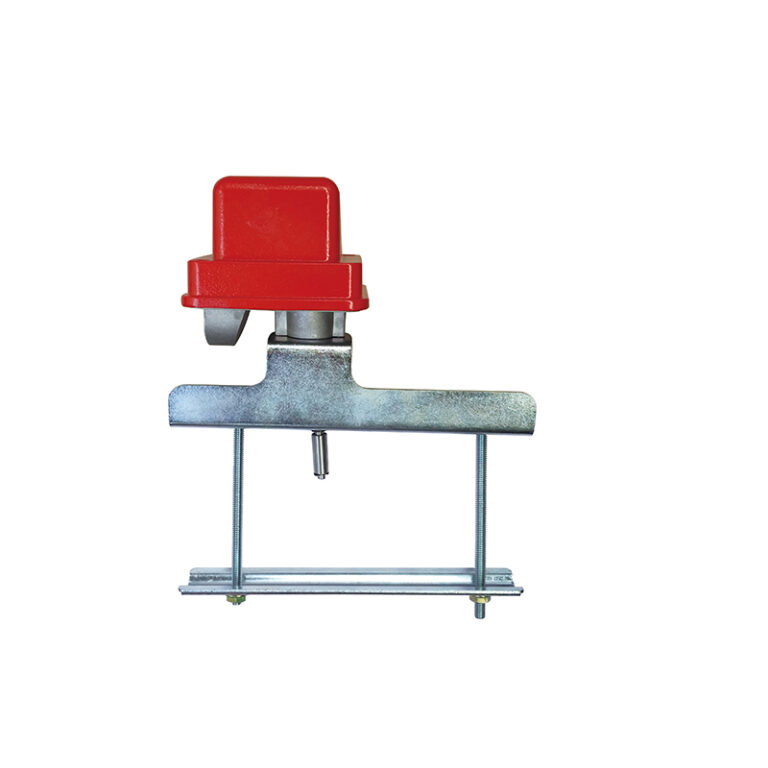
- Usually supervised by a supervisory switch fitted to the yoke, which signals when the valve moves away from fully open.
NRS gate valve (non-rising stem)
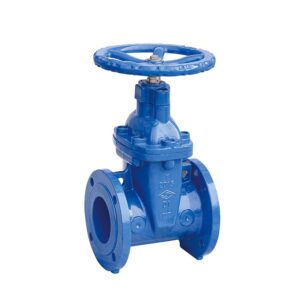
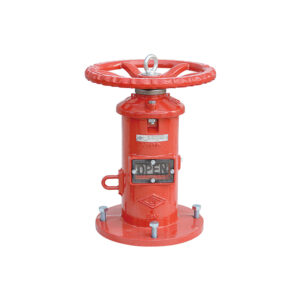
NRS stands for Non-Rising Stem: the stem turns in place and the gate travels up and down on a thread inside the body. The valve height stays constant, which suits tight spaces and buried installation.
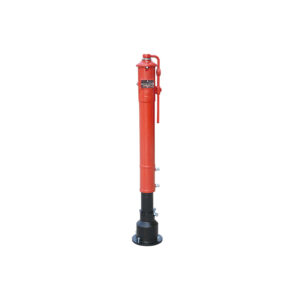
- Its position is not visible, so an indicator is fitted: a vertical indicator post for buried valves, or a wall post indicator when the valve is behind a wall.
- Common on fire mains and at building entries.
Quick comparison
| Item | OS&Y | NRS |
|---|---|---|
| Stem movement | Rises and falls | Turns in place |
| Position indication | By looking at the stem | Through a vertical or wall post indicator |
| Height | Taller, changes with opening | Constant and shorter |
| Typical location | Above ground: valve rooms and risers | Underground or behind walls, with an indicator |
| Supervision | Supervisory switch on the yoke | Supervisory switch on the indicator |
Code requirements
NFPA 13 and NFPA 24 require fire system control valves to be listed indicating valves and to be supervised in the open position by an approved method, such as electrical supervision with a switch connected to the fire alarm panel, or locking and sealing. An OS&Y valve is indicating by design; an NRS valve becomes indicating through the post or wall indicator fitted to it.
Why supervision matters
A valve closed by mistake disables the whole sprinkler system without anyone noticing. Supervision sends an immediate signal to the alarm panel when the valve moves away from open.
MECH models
| Model | Type | Ends | Sizes |
|---|---|---|---|
| XZ41X | OS&Y | Flanged ASME B16.1 CL125 | 2-1/2″ – 24″ (DN65 – DN600) |
| XZ81X | OS&Y | Grooved AWWA C606 | 2″ – 12″ (DN50 – DN300) |
| Z45XC-2 | NRS for indicator post | Flanged ASME B16.1 CL125 | 4″ – 24″ (DN100 – DN600) |
| Z85X | NRS | Grooved AWWA C606 | 2″ – 12″ (DN50 – DN300) |
Coating is fusion-bonded epoxy (FBE) to ANSI/AWWA C550. For OS&Y supervision, the MXHQ supervisory switch covers 2″ to 24″, rated 15 A at 125/250 VAC, UL / FM approved.
How to choose
- Establish where the valve goes: above ground, buried, or behind a wall.
- Above ground with enough headroom: OS&Y with a supervisory switch.
- Buried or in a tight space: NRS with a vertical indicator post or wall post indicator.
- Choose ends to suit the line: flanged or grooved.
- Confirm the pressure and approval required by the project specification.
Frequently asked questions
Can an NRS valve be installed above ground?
Yes, provided it has an indicator showing its position and is supervised as the code requires. In valve rooms, though, OS&Y is usually preferred because its position is visible at a glance.
Does a lock replace a supervisory switch?
NFPA 13 allows several methods of supervising valves open, including locking and sealing in certain cases. The accepted method is set by the code, Civil Defense requirements and the consultant for each project.
Grooved or flanged valve — what is the difference?
Grooved valves are joined with grooved couplings, which is quicker and lighter. Flanged valves bolt to a mating flange and are typical in large sizes and where connecting to flanged equipment.
What working pressure are the models rated for?
The models listed are rated 300 PSI, with 200 or 250 PSI available on request.
References
- NFPA 13 — Standard for the Installation of Sprinkler Systems.
- NFPA 24 — Installation of Private Fire Service Mains and Their Appurtenances.
- UL 262 — Gate Valves for Fire-Protection Service.
- FM Class 1120 / 1130 — Fire Service Water Control Valves (OS&Y and NRS Gate Valves).
- AWWA C550 — Protective Interior Coatings for Valves and Hydrants.
- MECH data for models XZ41X, XZ81X, Z45XC-2, Z85X and MXHQ on the product pages below.
This guide is for technical awareness and does not replace the manufacturer’s data sheet or the requirements of the project’s approved designer.
Part of a complete guide
This article is part of Approving Fire Protection Materials in Saudi Arabia: From the Consultant to Civil Defense.