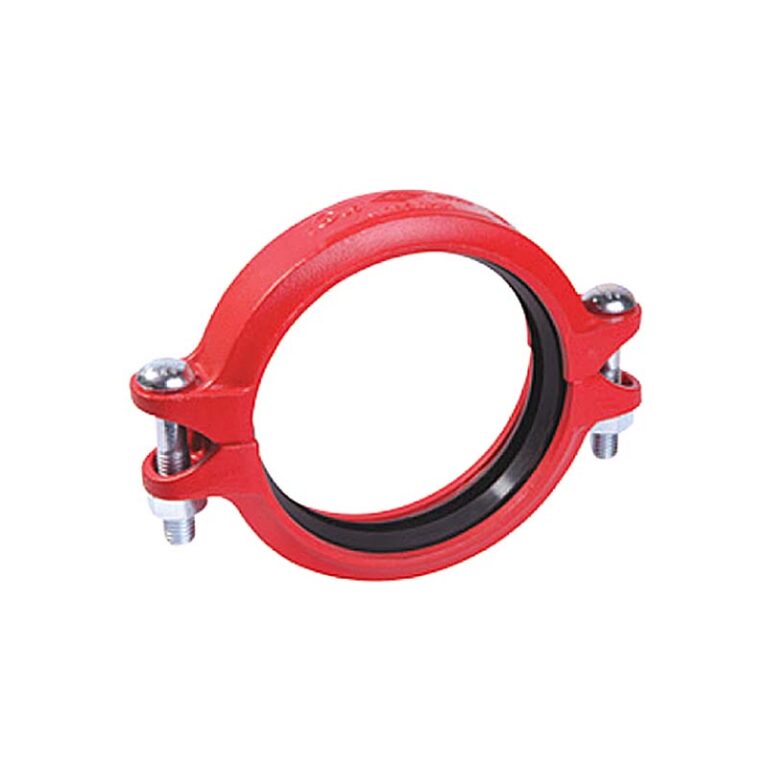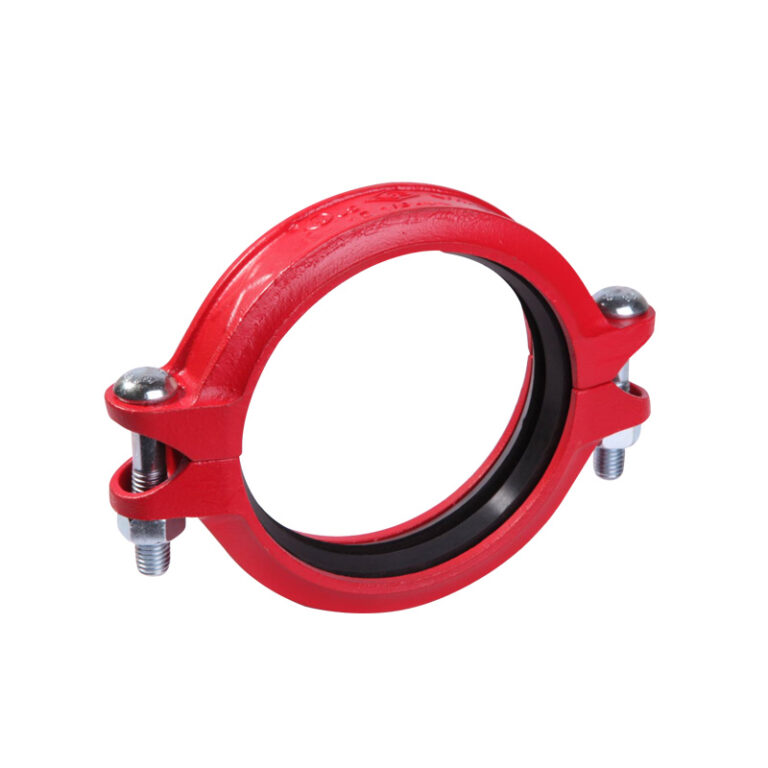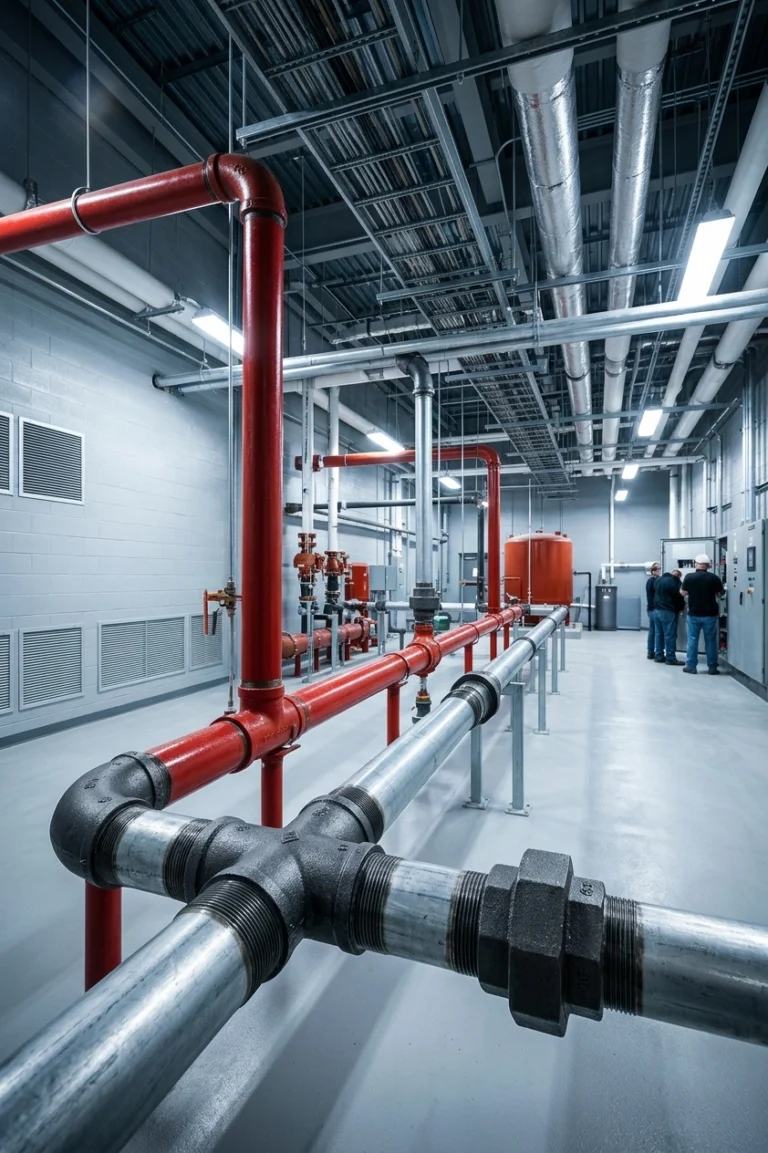
A grooved coupling only performs on a correct groove. The groove is the channel the coupling housing keys into, and any error in its depth, diameter or distance from the pipe end affects sealing and restraint. There are two ways to form it: roll grooving and cut grooving. This guide explains the difference, when each is used, and how to check groove quality on site.
Key points
- Roll grooving forms the groove by pressure without removing metal, and suits lightwall and standard pipe such as Sch 10 and Sch 40.
- Cut grooving removes part of the pipe wall, so it suits heavier walls and is not used on lightwall pipe.
- Groove dimensions come from the coupling manufacturer’s data and are checked with a diameter gauge.
- The pipe end must be cut square and free of burrs and raised weld seam.
How is the groove formed?
In roll grooving the pipe turns between two rollers that gradually press the wall until the groove is formed, leaving a matching bead inside the pipe. No metal is removed, so wall thickness stays essentially the same.
In cut grooving a cutting tool removes part of the outer wall to the groove depth, and the bore stays smooth.
Comparison
| Item | Roll grooving | Cut grooving |
|---|---|---|
| Metal removed | No | Yes |
| Suitable wall thickness | Lightwall and standard, e.g. Sch 10 and Sch 40 | Standard and heavier; not lightwall |
| Bore | Small bead opposite the groove | Smooth |
| Speed | Usually faster and easy on site | Relatively slower |
| Typical use | Most sprinkler systems | Heavy-wall pipe and some special uses |
Caution
Do not cut-groove lightwall pipe; removing metal weakens the wall at the groove and can leave less than the safe remaining thickness.
How to check groove quality
- Make sure the pipe end is cut square and deburred.
- On seam-welded pipe, grind the weld bead flush in the gasket seating area.
- Measure the groove diameter with a pi tape or suitable gauge and compare it with the limits in the manufacturer’s data.
- Check groove width and its distance from the pipe end against the data sheet.
- Inspect the gasket seat for scratches and rust before assembly.
Groove dimensions
The key groove dimensions are the gasket seat length from the pipe end, the groove width and the groove diameter. They are set for each size in manufacturers’ data and in AWWA C606, and must match the coupling used. MECH grooved couplings are designed to ASTM F1476, and the installation manual is available to download on the product pages.
Frequently asked questions
Can Sch 40 pipe be roll grooved?
Yes. Roll grooving is common for Sch 10 and Sch 40 pipe in sprinkler systems, within the size and wall limits in the roll grooving machine and coupling data.
Why is there a bead inside the pipe after roll grooving?
Because the metal is pushed inwards rather than removed. This is normal for roll grooving and is allowed for in the design of grooved couplings and fittings.
Are groove dimensions the same between manufacturers?
Standard dimensions are similar and based on specifications such as AWWA C606, but the final reference is the data sheet of the coupling manufacturer used.
References
- AWWA C606 — Grooved and Shouldered Joints.
- ASTM F1476 — Performance of Gasketed Mechanical Couplings for Use in Piping Applications.
- NFPA 13 — Standard for the Installation of Sprinkler Systems.
- MECH grooved installation manual on the product pages.
This guide is for technical awareness and does not replace the manufacturer’s data sheet or the requirements of the project’s approved designer.