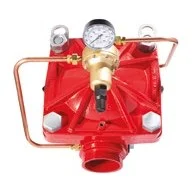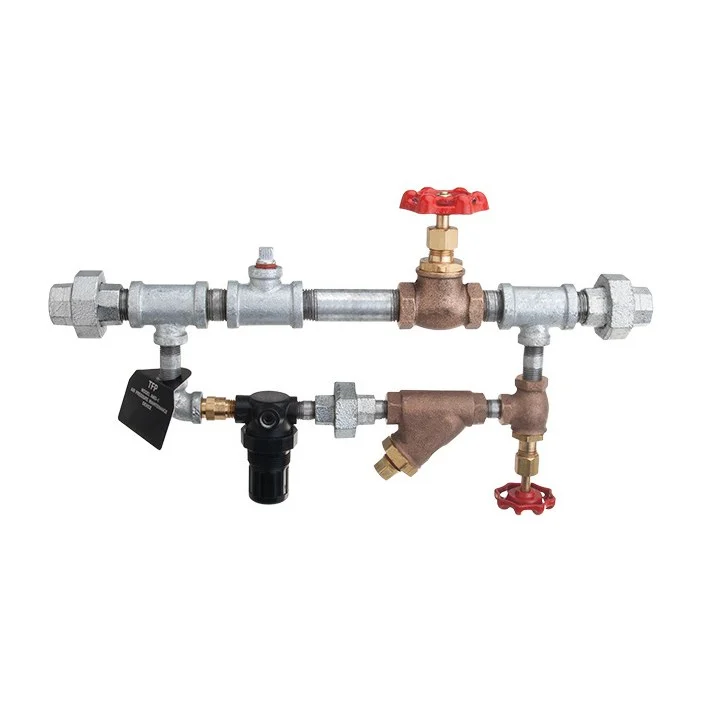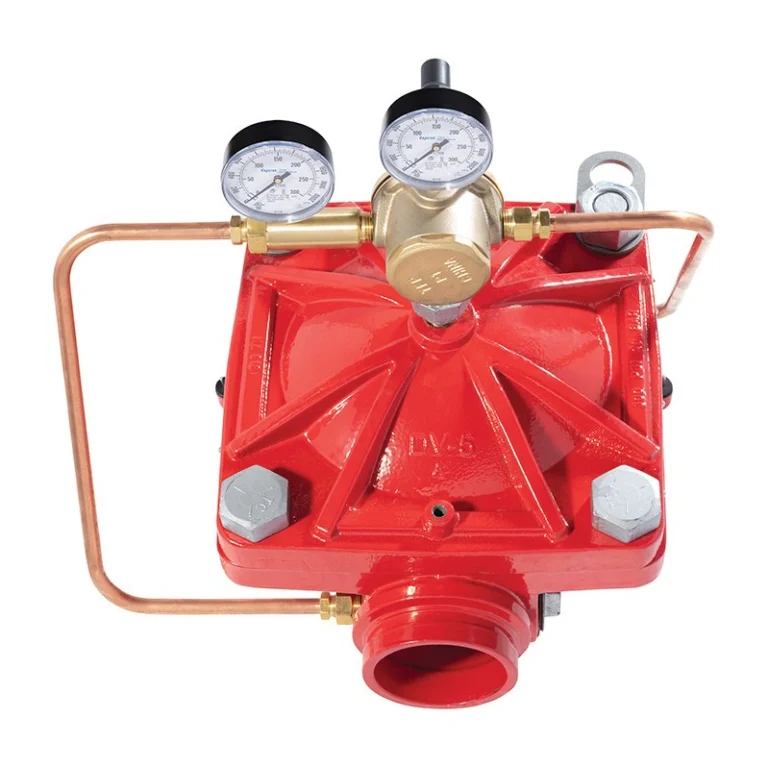
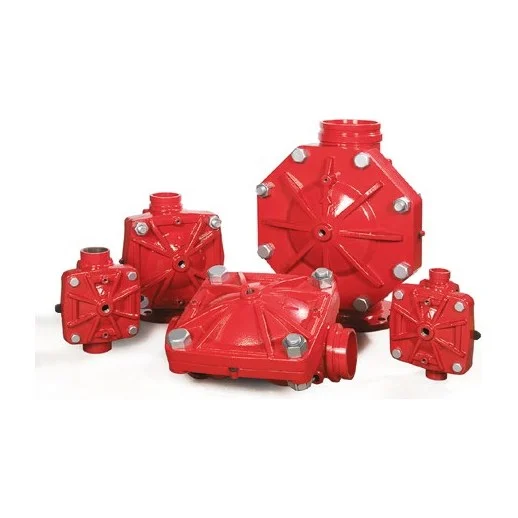
The TYCO DV-5A is a diaphragm-type automatic water control valve for deluge systems. With the remote-resetting, pressure-reducing trim it can be opened and closed under full flow from a remote location, and it maintains a preset outlet pressure. See wet, dry, pre-action and deluge systems compared.
In short
- Sizes: 3″, 4″, 6″ and 8″ (plus 165.1 mm).
- Maximum inlet 250 psi; outlet set range 80/90 – 175 psi by size.
- Electric actuation by automatic detection or remote manual electric release, with emergency manual release at the valve.
- Epoxy coated inside and out for corrosive industrial and outdoor locations.
- Approvals: UL, C-UL and LPCB, based on the specified trim and the Burkert Type 5282 solenoid.
How the valve works
In standby the diaphragm is held on the seat by water pressure in the diaphragm chamber. When the solenoid opens on electrical detection or a manual pull station, water leaves the diaphragm chamber faster than it is replenished through the supply restriction, the diaphragm lifts, water flows to the system and the alarm operates.
The pressure-reducing trim holds the preset outlet pressure, and remote resetting lets the valve be closed and reset from one or more locations.
Technical data
| Item | Value |
|---|---|
| Type | Diaphragm deluge valve, remote-resetting pressure-reducing trim |
| Sizes | 3″, 4″, 6″, 8″ (DN80 – DN200) |
| End connections | Groove × groove, flange × groove, flange × flange (per size) |
| Max. inlet pressure | 250 psi |
| Outlet set range | 80/90 – 175 psi |
| Material | Epoxy-coated ductile iron ASTM A536 |
| Approvals | UL · C-UL · LPCB |
The critical point: gauges above 175 psi
If system pressure exceeds 175 psi, replace the standard 300 psi gauges with separately ordered 600 psi gauges. Approval is based on the specified trim and solenoid only.
Installation steps
- Install the valve with the flow arrow on the diaphragm cover pointing in the direction of flow, and flush the pipe lines of chips and scale before installing.
- Do not lift the valve by its trim, and take care not to damage the trim during installation.
- Install the trim per the datasheet figure, adding the alarm control valve if required by the authority.
- Set the outlet pressure with the adjusting screw half a turn at a time, watching the outlet gauge until it stabilises.
Common mistakes
- Using a solenoid other than the one in the approval.
- Keeping 300 psi gauges on a system above 175 psi.
- Testing without notifying the owner and fire department or monitoring station, though some tests operate the alarms.
Inspection and maintenance
Before closing a main control valve for maintenance, obtain permission from the proper authorities and notify everyone affected. The owner is responsible for inspection, testing and maintenance to NFPA 25 and the authority having jurisdiction; any impairment must be corrected immediately.
The datasheet warns that a large drop in supply pressure (such as a main break) with a drop in diaphragm chamber pressure can open the valve; follow its procedure in that case.
Files and ordering
TYCO datasheet TFP1326 and the available approval certificates are in the files section of this page. When ordering, state the size, end connections, trim, solenoid and 600 psi gauges if needed. The datasheet lists the part numbers (P/N).
How to order
Use the “Build your order” section on this page: add every model and quantity, then send the whole order by email or WhatsApp. It reaches us as a tidy PDF request sheet and we contact you with the quotation.
FAQ
What does pressure reducing do?
It holds a steady outlet pressure within the set range regardless of inlet changes, protecting the system and nozzles.
What does remote resetting mean?
The valve can be closed and returned to standby from one or more remote locations without going to the valve room.
Can it be operated manually?
Yes, the trim provides emergency manual release at the valve, in addition to electric actuation.
References
- TYCO TFP1326 — Datasheet (attached)
- NFPA 13 — Standard for the Installation of Sprinkler Systems
- NFPA 25 — Inspection, Testing and Maintenance of Water-Based Fire Protection Systems
This page is general information to help with selection and ordering, taken from the attached TYCO datasheet. Final design is set by the project’s approved designer; the project specification, the consultant’s drawings and the latest datasheet revision govern.