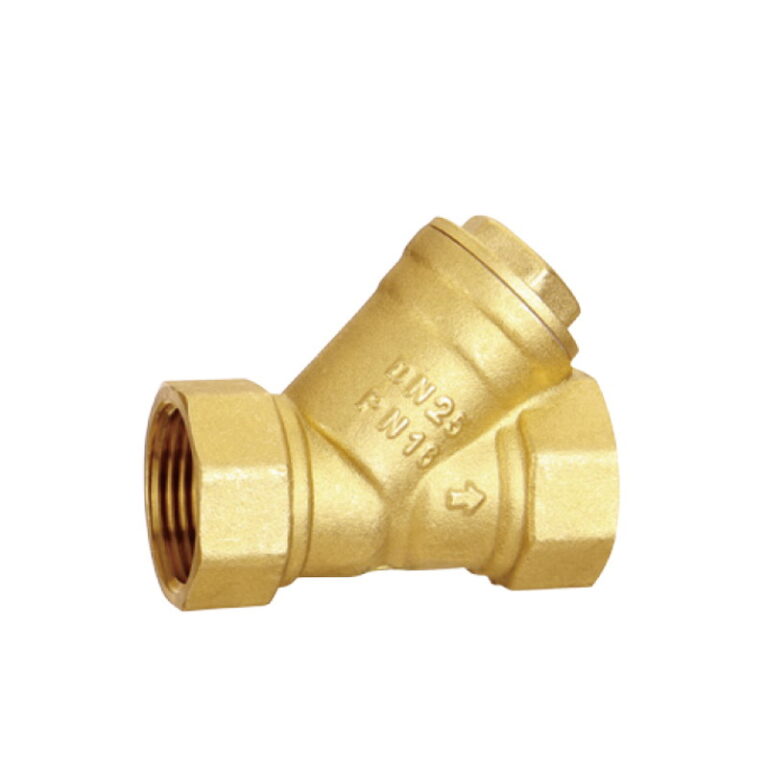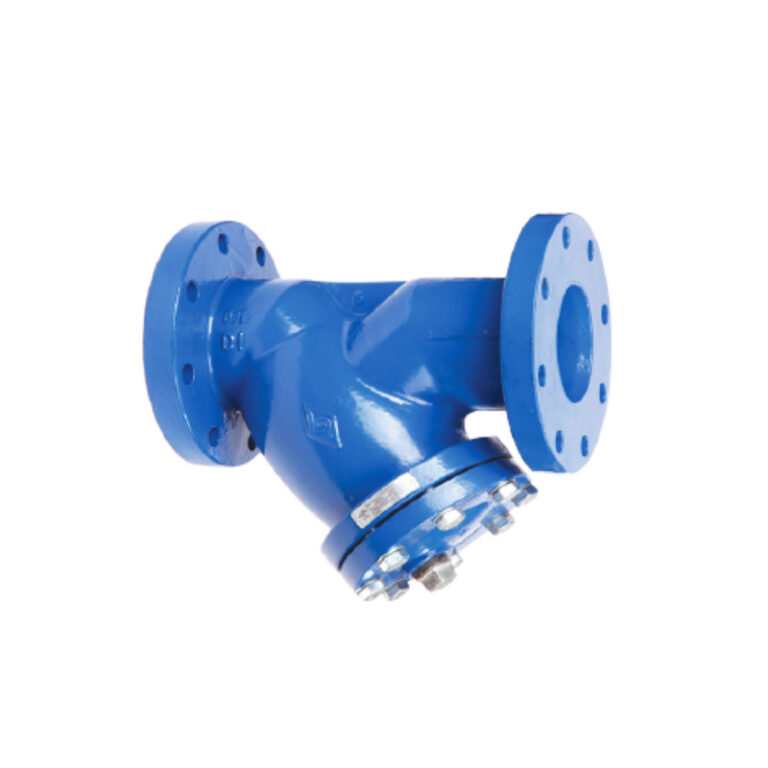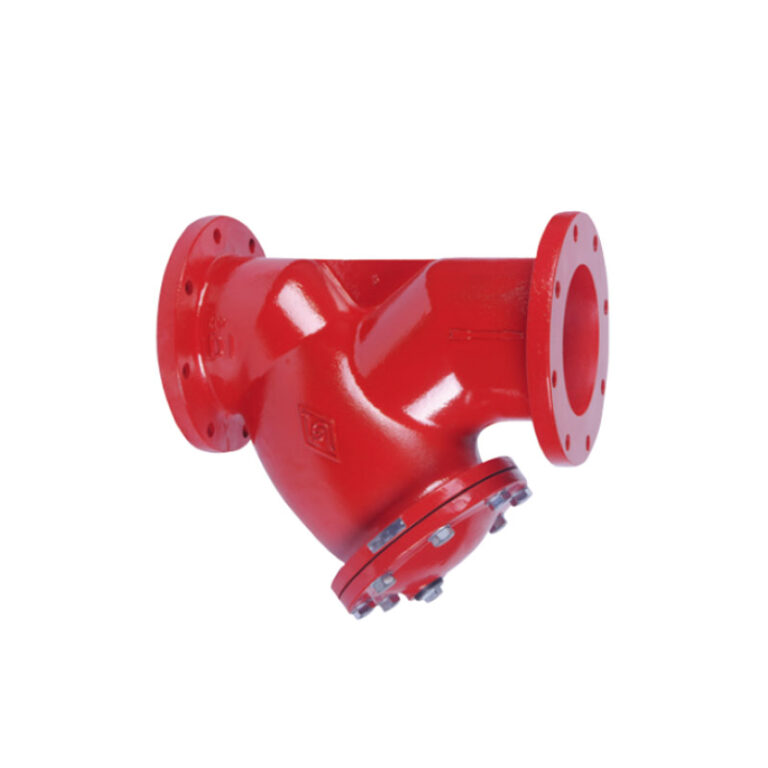
A Y-strainer traps grit, scale, weld slag and swarf before they reach sensitive equipment downstream, such as pressure reducing valves, pumps and meters. It takes its name from the screen chamber branching off the body at an angle, like the letter Y. This guide explains how it works, where to install it, how to clean it, and how MECH models compare.
Key points
- Protects downstream equipment from blockage and damage.
- Installed ahead of the equipment it protects, with the body arrow pointing with the flow.
- On horizontal lines the screen chamber points downwards so debris collects in it.
- For fire service choose a UL Listed model; at MECH that is the red V4.
How does it work?
Water enters the body and passes through a cylindrical screen in the angled branch. Particles larger than the screen openings stay inside; clean water carries on. A cap or blow-off plug at the end of the branch lets debris out or the screen be removed for cleaning.
Where is it installed?
- Ahead of pressure reducing valves and sensitive control valves.
- On the suction or supply line of equipment affected by debris, as the system design requires.
- Ahead of meters and instruments.
- After new pipework, where installation debris is common.
Caution
A strainer adds pressure loss that grows as the screen fills. It must be part of the regular inspection and cleaning programme, and the designer should account for it in the hydraulic calculations.
MECH models
| Model | Ends | Sizes | Working pressure | Approval |
|---|---|---|---|---|
| V4 (red) | Flanged ASME B16.1 CL125 | 2″ – 12″ | 300 PSI | UL Listed |
| V4 (blue) | Flanged ASME B16.1 CL125 | 2″ – 12″ | 300 PSI | — |
| V1-601A (brass) | Threaded ISO 228 | 1/2″ – 2″ | PN16 | — |
Correct installation
- Fit the strainer ahead of the equipment it protects, with the body arrow in the flow direction.
- On a horizontal line point the screen chamber downwards. On a vertical line follow what the data sheet allows.
- Leave enough room in front of the chamber cap to withdraw the screen.
- Isolation valves before and after the strainer, where the design provides them, let it be cleaned without draining the whole system.
Cleaning and maintenance
Open the blow-off plug to flush light debris, and when needed isolate the strainer and withdraw the screen to wash it. Check the screen straight after new pipework is commissioned, then regularly under the maintenance programme. Never run the line with the screen removed.
Frequently asked questions
Should the screen chamber point up or down?
On horizontal lines usually down, so debris collects in the chamber and is easy to flush. Check the data sheet for vertical installations.
What is the difference between the red and blue V4?
The red V4 is UL Listed for fire systems; the blue one is for water networks. Sizes and pressure are similar according to the product pages.
When should the strainer be cleaned?
After new lines are first run, then periodically under the maintenance programme, or whenever pressure drops downstream of the strainer.
References
- NFPA 13 — Standard for the Installation of Sprinkler Systems.
- NFPA 25 — Inspection, Testing, and Maintenance of Water-Based Fire Protection Systems.
- MECH data for models V4 and V1-601A on the product pages below.
This guide is for technical awareness and does not replace the manufacturer’s data sheet or the requirements of the project’s approved designer.