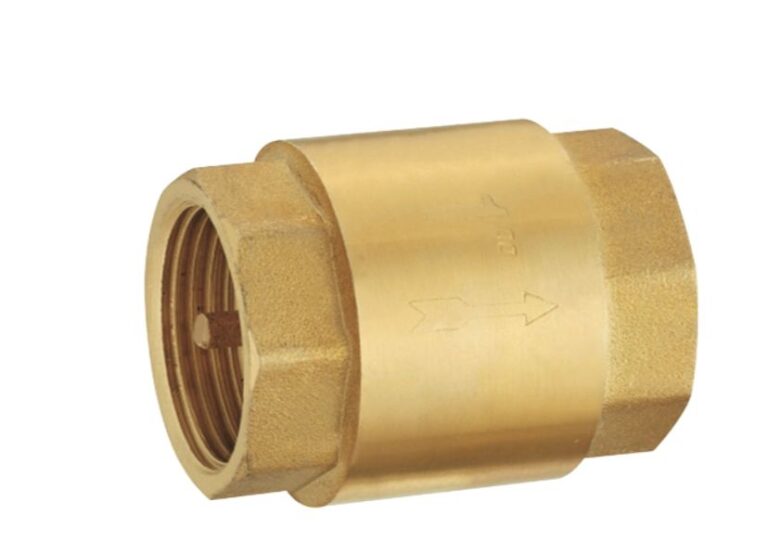
A check valve lets water flow in one direction only and closes automatically when flow reverses. In fire systems it protects pumps from backflow, keeps risers from draining, and separates water sources. This guide explains the types, when to use each, and what to check before ordering and installing.
Key points
- It works on line pressure alone; no manual operation is needed.
- The common types are swing and wafer, each with its own place.
- For fire systems choose a model UL / FM approved for the size and pressure required.
- The flow arrow on the body shows the direction; installing it backwards blocks the line.
How does a check valve work?
Inside the body is a disc that water flowing in the right direction pushes open. When flow stops or reverses, the disc returns to its seat by its own weight or by a spring, closing the line and preventing backflow.
Where is it used in fire systems?
- On the fire pump discharge: to stop water returning to the pump when it stops.
- On supply lines and risers: to keep the system full and pressurised.
- Between water sources: for example separating the town main from the fire department connection.
An alarm valve is not an ordinary check valve
A wet alarm check valve also acts as a check valve, but its main job is to sound the alarm when water flows to the sprinklers. It has its own article in the library.
Swing or wafer?
| Item | Swing | Wafer |
|---|---|---|
| Closing | Hinged disc returns by its weight | Single or dual spring-loaded disc |
| Length | Longer | Very short, fits between two flanges |
| Pressure loss | Usually low | Relatively higher because of the spring |
| Orientation | Horizontal, or vertical with upward flow per the data sheet | More flexible per the data sheet |
| Typical use | Pump discharge and supply lines | Tight spaces and water networks |
MECH models
| Model | Type | Ends | Sizes | Pressure | Approval |
|---|---|---|---|---|---|
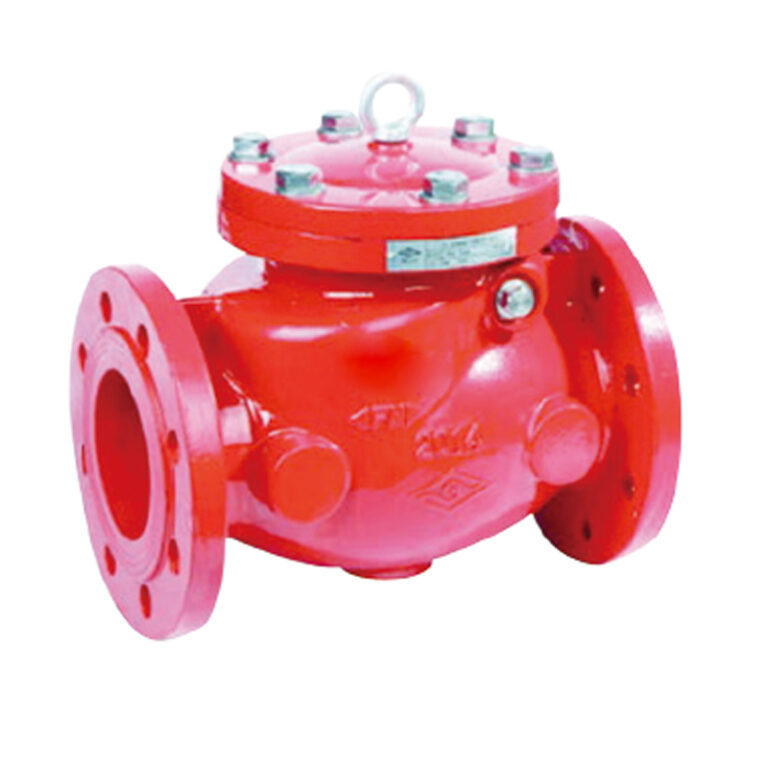
| H44X2 | Swing (red) | Flanged ASME B16.1 | 2″ – 12″ | 300 / 363 PSI | UL / FM / LPCB |
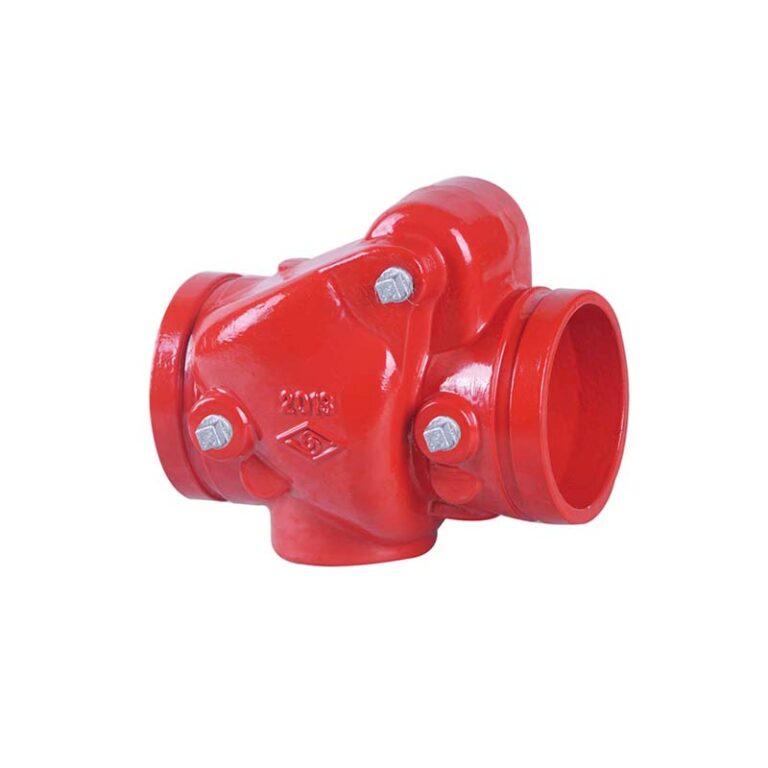
| H84X | Swing (red) | Grooved AWWA C606 | 2″ – 12″ | 300 / 363 PSI | UL / FM / LPCB |
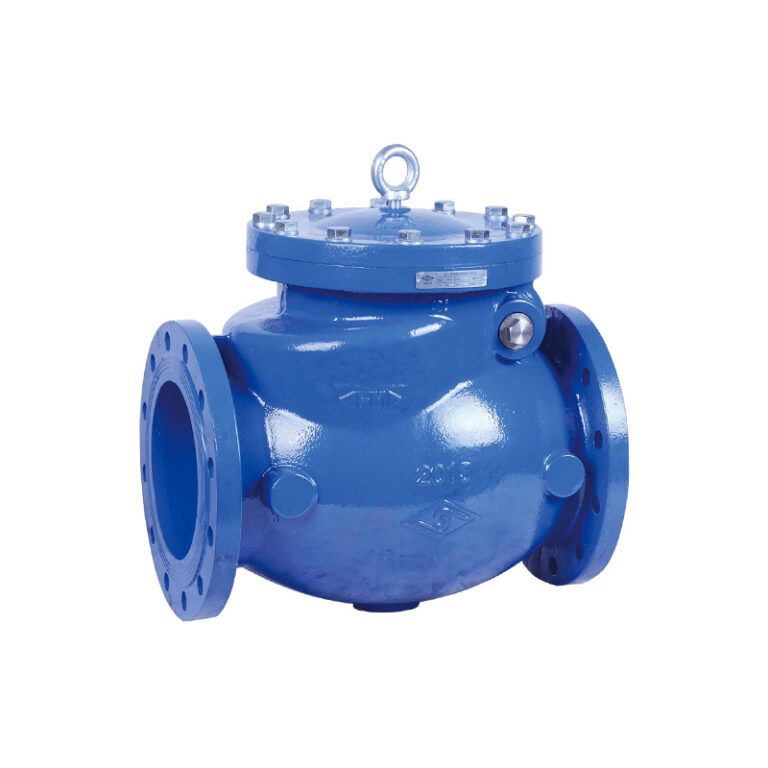
| H44X2 | Swing (blue) to AWWA C508 | Flanged ASME B16.1 CL125 | 2″ – 12″ | 300 PSI | — |
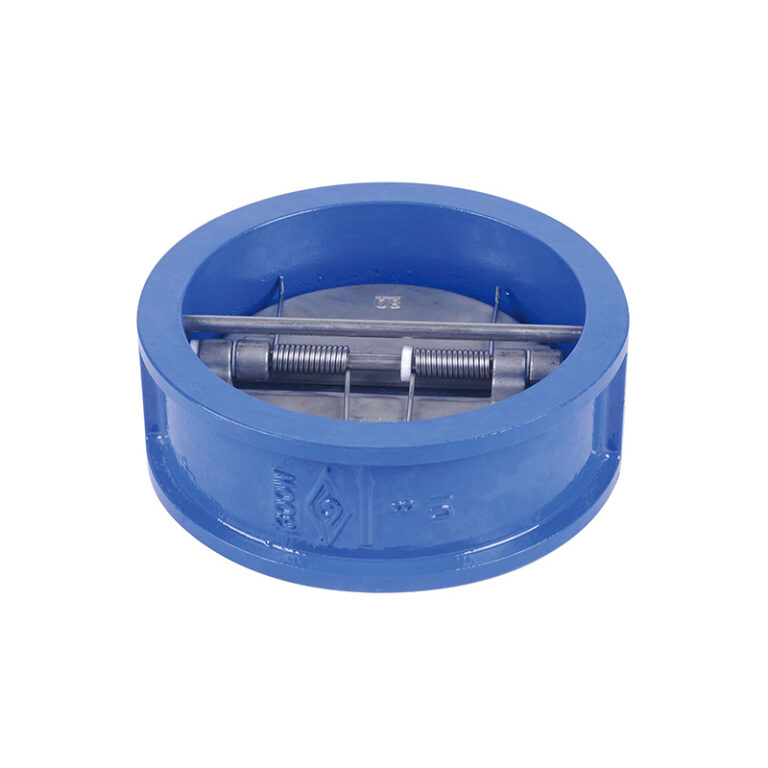
| DH77X | Wafer (blue) | Between CL125 / CL150 flanges | 2″ – 18″ | 300 PSI | — |
| H12X-403A | Brass in-line | Threaded ISO 228 | 1/2″ – 2″ | PN16 | — |
The red UL / FM approved models are for fire systems; the blue and brass models are for water networks and general services.
Points to check when ordering and installing
- Define the service: a fire system needs a listed and approved model; a general water network has wider options.
- Choose ends to suit the line: flanged, grooved or wafer between flanges.
- Check the working pressure for the size in the product table.
- Install the valve with the body arrow matching the flow direction.
- Allow enough straight pipe before and after the valve as the data sheet advises, and avoid fitting it straight after an elbow or pump where possible.
Common mistakes
- Installing the valve backwards.
- Using an unapproved model in a fire system.
- Fitting a wafer valve where grooved ends are needed without checking compatibility.
- Neglecting periodic checks of disc movement and seat condition.
Frequently asked questions
Can a check valve be installed vertically?
Some models allow vertical installation with upward flow. Check the model’s data sheet and listing limits before installing.
Why fit a check valve on the fire pump discharge?
To stop water returning from the system to the pump when it stops, and to keep the system full and pressurised.
What is the difference between the red and blue models?
The red MECH models are UL / FM approved for fire systems; the blue ones are for water networks, such as the blue H44X2 made to AWWA C508.
Does the valve need maintenance?
Yes. It is covered by the inspection, testing and maintenance programme for fire systems, which checks disc movement and seat condition.
References
- NFPA 13 — Standard for the Installation of Sprinkler Systems.
- NFPA 20 — Installation of Stationary Pumps for Fire Protection.
- NFPA 25 — Inspection, Testing, and Maintenance of Water-Based Fire Protection Systems.
- AWWA C508 — Swing-Check Valves for Waterworks Service.
- MECH data for models H44X2, H84X, DH77X and H12X-403A on the product pages below.
This guide is for technical awareness and does not replace the manufacturer’s data sheet or the requirements of the project’s approved designer.